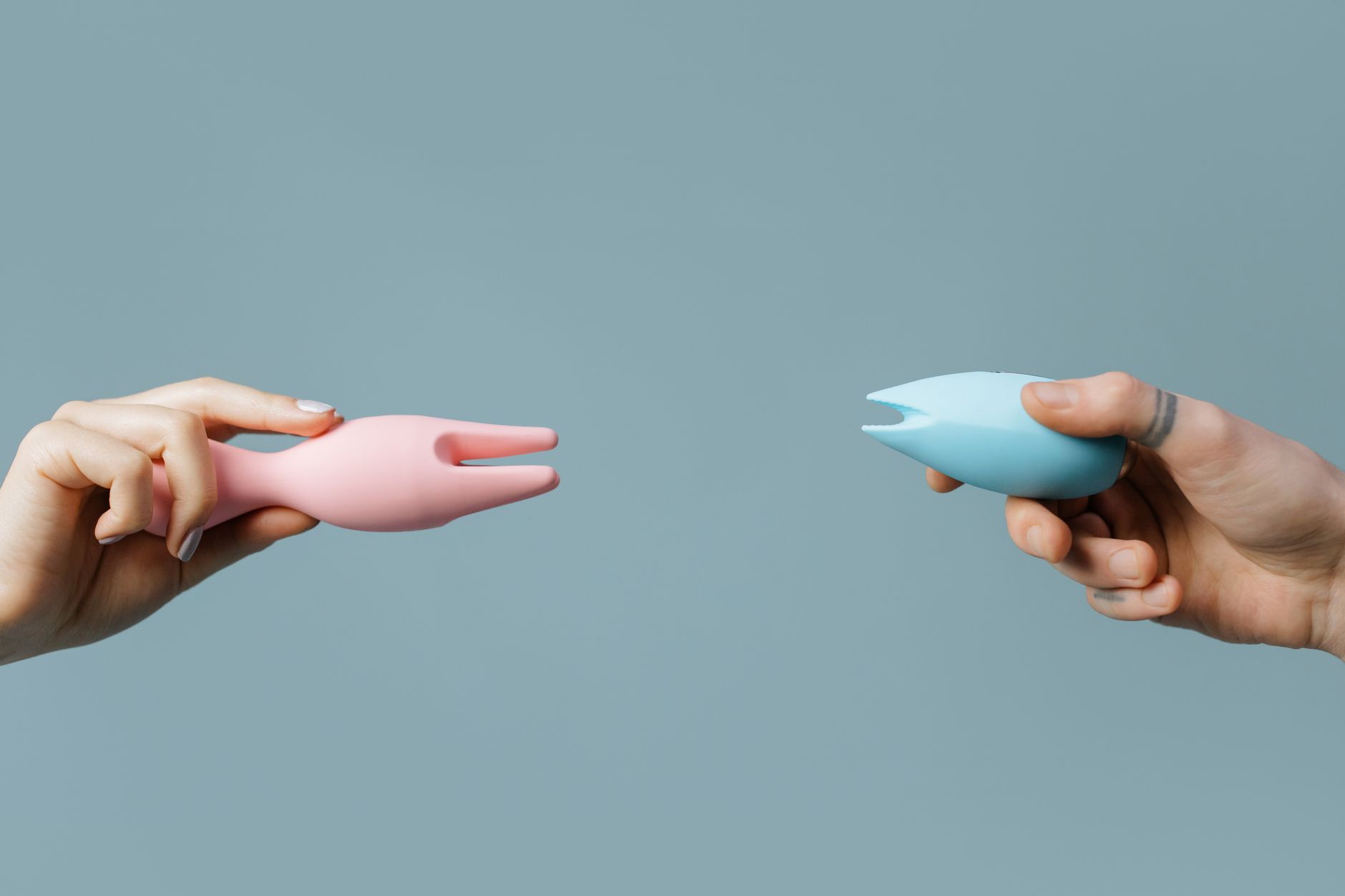
Why Lemon Vibrators Feel Different With a New Partner
Introducing a clitoral vibrator to a new relationship changes the sensation. Not because something's wrong. Because everything's different, including you.
You've used a lemon vibrator before. You know your body, your patterns, what works. Then you meet someone new, things get intimate, and you introduce a clitoral vibrator into the mix. Except it doesn't feel the way it used to. The sensation seems muted, or sharper, or it takes longer, or the pressure needs to be different. Your immediate thought: something's wrong. Actually, everything's exactly right. You're just experiencing pleasure in a completely different context, and your nervous system knows the difference even if your brain hasn't caught up yet.
There's a psychological layer here that gets totally overlooked. Your body isn't broken. It's responsive. And right now it's responding to newness, vulnerability, and the particular chemistry of this specific person.
When you're with a new partner, your arousal system doesn't operate the same way it does alone. You have a nervous system that's simultaneously trying to relax into pleasure and stay alert to social cues. Your parasympathetic nervous system (the "rest and digest" mode you need for orgasm) is competing with a heightened sympathetic response (the "pay attention" mode that kept us alive for millennia). This is completely normal. It's not a malfunction. It's just biology.
That's why lemon sexual toys and other clitoral vibrators often need different settings, angles, or pressure when you're with someone new. Your threshold for sensation literally shifts because your baseline arousal state is different. You're not numb. You're just calibrating to a new context.
Here's the part nobody talks about clearly. When you're using a lemon vibrator alone, you have complete control over the narrative. You're not performing. You're not managing anyone else's reaction. You're just experiencing. With a new partner in the room, even if they're being supportive and enthusiastic, there's a psychological load that changes the equation.
Three specific shifts happen:
1. Attention splits. A part of your brain is now monitoring the other person. Are they enjoying watching? Is the angle okay for them? Do they think this is hot? That split attention reduces the mental bandwidth available for arousal itself.
2. Shame gets louder. Even if you don't consciously feel ashamed, the vulnerability of being watched while using a sex toy can activate old scripts. Messages about what's "normal" or "proper" or "too much." Those scripts get quieter alone and louder with an audience, even a loving one.
3. Arousal patterns shift. Alone, you might go straight for intensity. With a new partner, your body often wants to pace things differently. The lem vibrator might feel intense when you were ready to jump to setting 5, but with someone new your system actually prefers building from setting 1. That's not weakness. It's your nervous system asking for something different.
Your clitoral vibrator actually does create a different sensory experience depending on the context. Not because the device changed. Because your tissue responds differently based on arousal state, hormone levels, pelvic floor tension, and mental state.
When you're aroused with a new partner, the erectile tissue around your clitoris engages differently than when you're alone. Your pelvic floor might hold more tension initially (another nervous system response to newness). The increased blood flow pattern is different. So the vibration that felt perfect on Tuesday night alone might feel slightly off on Friday night with someone new. That's not a compatibility problem with the toy or the person. It's just physiology responding to context.
Some people find they prefer different patterns with a partner. If you normally use a pulsing pattern solo, you might discover that a steady vibration works better when someone else is present. Neither is "right." They're just revealing different preferences depending on your nervous system state.
Let's be real. Introducing a lemon clitoral vibrator to a new sexual relationship is an act of trust. You're saying: here's something that brings me pleasure. I want you to see this. I want you to be part of this. And that vulnerability, even when it's welcome and reciprocated, changes your body's baseline. Your nervous system is partly relaxed and partly on alert. That's not a problem to solve. That's a signal to acknowledge.
The first time you use a vibrator with a new partner, you're also unconsciously assessing their reaction. That observation takes real cognitive resources. It's not rational or controllable. It's just how we're wired. Over time, as familiarity increases and you develop a sense of how they respond, that assessment process quiets down. And then your sensation patterns often shift again. Not worse, usually just different. More integrated.
Four things I recommend to couples introducing lemon vibrators together.
Start with solo demonstration. Before you're in a moment together, show your partner your device alone. Not as a performance, but as information. Let them see how you use it, what settings you prefer, what the whole thing looks like in action. This demystifies it and gives their nervous system time to normalize the image before you're both aroused.
Prioritize their comfort first. This sounds counterintuitive, but when a new partner is uncomfortable or uncertain about the vibrator, your body picks up on that tension. Before you use it together, have a conversation. What are their concerns? Do they worry they're not enough? Are they unsure how to participate? Those conversations take 10 minutes and change everything.
Use it as foreplay, not the main event. Integrate the lem vibrator into your usual routine instead of making it the centerpiece. Use it during mutual stimulation, during oral, during penetration. This normalizes it as a tool rather than a replacement, and it gives you both time to get comfortable with its presence before you're relying on it for orgasm.
Communicate about sensation without shame. "This feels different with you here and I'm not sure why" is a statement, not a failure. Say it out loud. Your partner knowing that you need to start at a lower setting, or prefer a different angle, or want longer warm-up time is valuable information, not bad news.
Sometimes the shift isn't just about nervousness. Sometimes introducing a vibrator to a new relationship reveals a compatibility question that was already there. If your partner responds with defensiveness, jealousy, or pressure to hide the vibrator, that's information. How to use lemon vibrators with a partner who is skeptical or resistant goes deeper into that territory.
Or sometimes the sensation difference points to anxiety patterns that benefit from attention. If you notice you can't relax into pleasure around this person, even when they're being supportive, that might be a sign that this relationship dynamic has tension worth exploring separately. That's not a reason to stop using the toy. It's just useful information.
Research on couple dynamics suggests it typically takes 4-6 weeks of regular sexual activity for a new partner to feel genuinely familiar from a nervous system perspective. That doesn't mean you'll suddenly orgasm easily after six weeks. It means your baseline arousal state will feel more stable. The sensation of your clitoral vibrator will probably feel different at week six than it does at week one. That's not a plateau. That's deepening familiarity.
Most of my clients report that by the time they've been with a new partner for two to three months and have integrated toys into their regular rhythm, the sensation actually becomes richer. Not easier necessarily, but more nuanced. You start noticing variations. You get curious about different settings. The whole thing feels more integrated into the relationship rather than like a separate tool you're managing.
Honestly, the fact that lemon vibrators feel different with a new partner is a feature, not a bug. It means your body is responsive, that you're capable of adapting to different contexts, and that you're not stuck in a single pattern. Sexual satisfaction in a long-term relationship depends partly on that flexibility. Your ability to feel pleasure differently in different contexts, with different people, in different states of mind. That's resilience.
So if you're in that early stage with someone new and your vibrator feels weird or doesn't work the same way, that's normal. Your nervous system is doing exactly what it should do. Give it time. Have the conversations. Use the toy in ways that feel good right now, which might be different than how you use it alone. And notice how it shifts as you and your partner become more familiar.
Yes, if you're planning to use it with them. A 30-second conversation ("I use a vibrator. I'd like to incorporate it if you're comfortable.") prevents awkward surprises and gives you both time to process. If you're not sure you'll use it together yet, no obligation to mention it immediately. But if sex is happening and you're thinking about it, that's the moment.
Because your nervous system is processing multiple sensations and social cues simultaneously. Your brain is trying to integrate the vibration, their touch, their presence, and your own arousal. That's cognitively expensive. Over time, as their touch becomes familiar, this gets easier. For now, try positioning so their hands aren't directly on top of the vibrator, or ask them to focus on other parts of your body while you're using it.
Completely normal. Your arousal baseline shifts with context. Alone, you might need setting 4. With someone new, setting 2 might be perfect because you're already partially aroused just from their presence and the novelty. Neither is the "real" you. You're just different in different situations.
Most people report it feeling integrated within 4-8 weeks of regular use together. But "normal" doesn't mean "exactly like using it alone." It means comfortable, familiar, and not weird. The sensation might always be slightly different with a partner. That's okay.
Not if the relationship is solid. If a vibrator becomes a source of conflict, that usually means something else is already present: insecurity, pressure to perform, poor communication. The vibrator just made it visible. The relationship itself is still fine. But that's worth exploring separately, potentially with a couples therapist.
Yes, unless you prefer having a separate toy for partnered sex. There's no rule. Some people like keeping the solo vibrator as their own private tool. Some people like using the same one in both contexts. Both approaches work. Choose based on what feels right for your relationship.
When lemon vibrators feel different with a new partner, the temptation is to think something went wrong. Your body changed. The toy stopped working. The chemistry isn't right. Usually it's none of that. You're just experiencing pleasure in a new context, with a new nervous system state, with new vulnerability. That takes adjustment. That's human. And on the other side of that adjustment is often deeper satisfaction, better communication, and more integrated pleasure. That's worth the awkward early stage. Give yourself the grace to feel weird for a bit. It gets better.
If you have questions about making this transition smoother, or if you'd like to talk through relationship dynamics affecting your pleasure, reach out. That's what I'm here for.