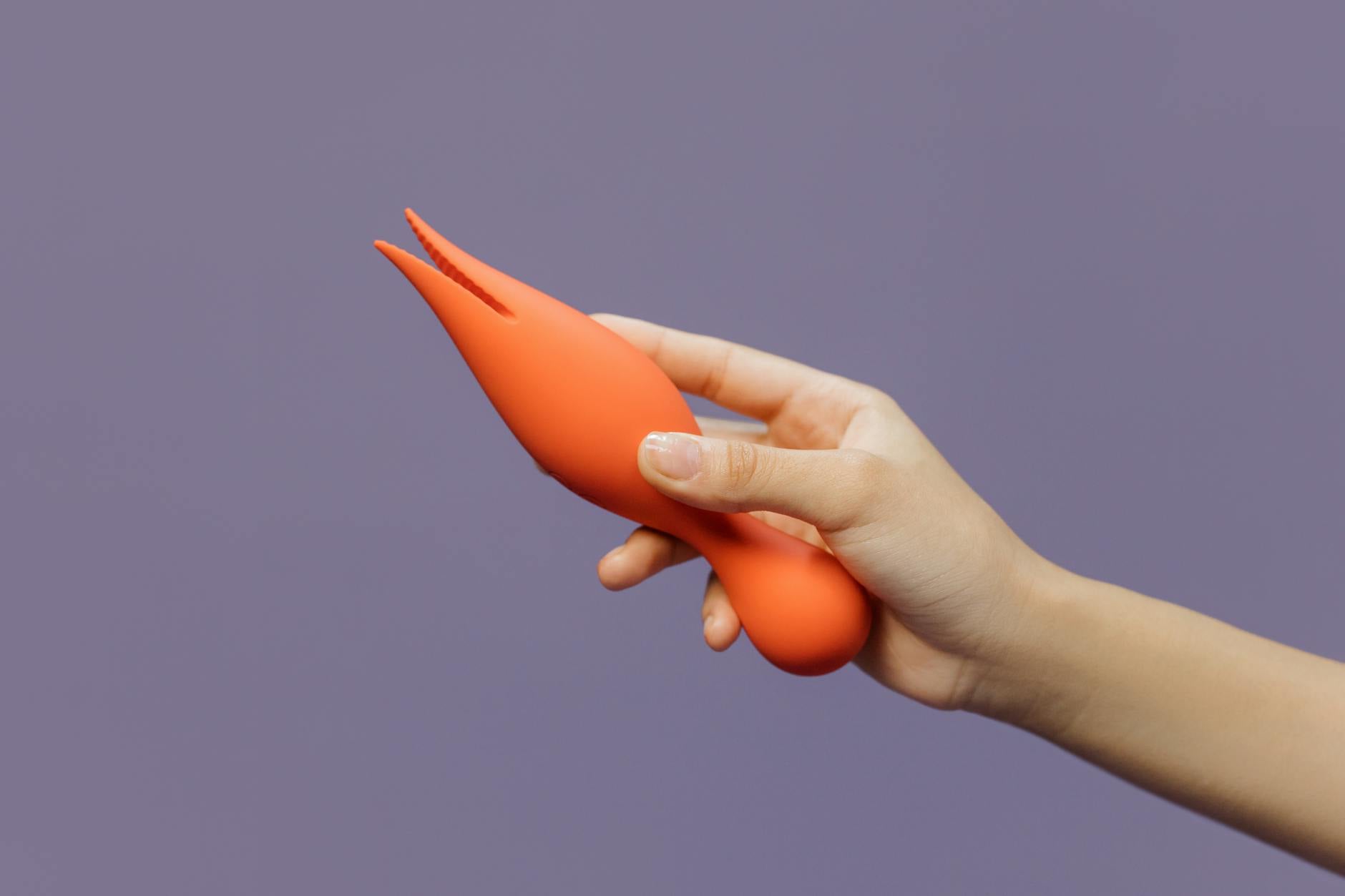
How to Use Lemon Vibrators With a Partner Who's Skeptical or Resistant
Your partner thinks toys mean you're not satisfied. Let's reset that conversation. Here's how to introduce a lemon vibrator as something that deepens pleasure together, not a replacement for connection.
It's not really about the toy. It's about what they think the toy means. That you're bored. That they're not enough. That you've been faking satisfaction. That bringing in a vibrator signals the beginning of the end. None of these are true, but until you name them directly, your partner's brain stays stuck in that loop.
I've worked with hundreds of couples navigating this exact moment, and the couples who move through it successfully don't lead with the toy. They lead with the reassurance. Then the curiosity. Then, eventually, the lemon vibrator becomes what it actually is: a way to deepen something that's already working.
This is non-negotiable. Most people try to introduce a vibrator mid-intimacy or right before getting intimate, which turns it into a performance pressure. Your partner's guard is already up. Adding a toy feels like a test.
Instead, pick a time when you're both calm, clothed, and not touching. A car ride. A walk. Sunday morning coffee. Somewhere you can talk without the added weight of bodies and expectation.
Start with this: "I want to try something new in bed, and I need to know you won't feel threatened by it. Because I'm not going anywhere, and you're not being replaced. But I think exploring this together could actually make things better between us."
Then stop talking. Let your partner respond. They might say "okay" or "I don't know" or "I think that means you're not satisfied." All of these are invitations to go deeper.
This is the core fear. Reframe it like this: "A lemon vibrator doesn't satisfy me instead of you. It satisfies a specific part of my body in a way that's physically different. It's not about your skills or my feelings for you. It's about anatomy and sensation."
Then get specific. A lemon clitoral vibrator uses suction and vibration patterns that a hand or even a tongue cannot replicate. Full stop. This isn't an opinion. It's physics. Your partner's body is beautiful and skilled and necessary. But it is also not a vibrator. And that's the point.
You might say: "I love how your hands feel on me. That's intimate and connected. A lemon vibrator feels completely different. Not better. Different. And I'd like to experience both." This is 100% true, and it separates pleasure into categories instead of a hierarchy.
Don't ask "Can I use a vibrator?" Ask "Would you be interested in exploring this together?" The first version invites permission and resistance. The second invites participation.
If your partner says "I don't know," that's not a no. It's a maybe. Respond with "What would help you feel more comfortable?" The answer might be "seeing it first," or "understanding how you'd use it," or "knowing this doesn't mean we stop having sex the way we do now."
If your partner says "I think you should just enjoy what we do," that's actually a statement about their own insecurity, not about your pleasure. Acknowledge it: "I do enjoy what we do. And I also want to explore other kinds of sensation. Those two things are both true." Don't make it a negotiation. Make it an invitation.
Once you've had the reassurance conversation and your partner seems open, move to the next phase: education without pressure. You might watch a video together about how lemon vibrators work, or read an article about couples using sex toys, or even just leave a Hello Nancy review open on your laptop where your partner happens to see it.
The goal is exposure without demand. Your partner's brain needs time to shift from "threat" to "curious." That takes repetition, not pressure.
When your partner is ready, let them hold the toy. Let them see how it feels in their hand. Let them watch you use it alone first, so there's no performance pressure on them. This is not sexy. It's clinical. That's okay. The sexiness comes later, once the fear is gone.
I know that sounds backwards. But here's why it works: if your partner's first experience with the toy is watching you feel good from it, their brain is still looping on insecurity. "Am I still needed?" Instead, use the toy on your partner first.
If you have a vulva and your partner has a penis, a lemon clitoral vibrator won't do much for them directly. But your hands, while holding the vibrator, can feel incredible. Or you can use it on yourself while they're inside you, which adds a new sensation for both of you. The key is making them feel the pleasure too, not just watch you have it.
This seems small, but it reframes the toy as something that benefits the whole experience, not just you.
Don't start with "let's use the lemon vibrator tonight." Start with "let's have sex the way we usually do, and at the end, I'd like to try something new." This keeps the familiar rhythm intact. Your partner doesn't feel like everything is changing. The vibrator becomes a supplement, an enhancement, not a fundamental shift.
As your partner gets more comfortable, they might ask for it earlier in the experience, or suggest using it in a new way. Let that come from them. Your job right now is to show that this doesn't disrupt what already works.
This is the inflection point where skepticism turns into genuine curiosity. Some partners, once they get over the initial fear, become genuinely interested in how their partner experiences pleasure. If your partner offers to use the vibrator on you, accept. Show them how. Let them experiment with the patterns and speed.
This does three things: it makes your partner an active participant instead of a passive observer, it gives them control and agency, and it deepens intimacy because you're literally guiding them into your pleasure.
Some partners need more time than others. Some have deeper insecurities that a vibrator isn't actually about. If you've had the calm, clear conversation and your partner is still saying no, that's information about what they need to feel secure.
It might be more date nights. More reassurance about your attraction to them. More time in therapy working on their own relationship anxiety. A vibrator can't fix an insecure attachment. But an open conversation about what's really driving the resistance can.
You deserve pleasure and exploration. Your partner deserves to feel secure. Those things aren't mutually exclusive. They're actually requirements for the same thing: genuine, adventurous, confident intimacy.
Here's what I tell couples: using a lemon vibrator with your partner isn't about avoiding them or replacing them. It's the opposite. It's about getting so much pleasure and sensation from the experience that you want to share it with them. It's about creating a moment where both of you feel good, where both of you are present, where the goal is shared satisfaction instead of a performance.
Most couples who successfully introduce toys into their relationship report deeper connection afterward, not less. Because they've had a conversation about desire that they've never had before. Because they've watched their partner experience pleasure differently. Because they've acted on curiosity instead of staying stuck in old patterns.
Your partner's skepticism isn't a barrier. It's an opportunity to communicate more clearly about what you both want and need. That conversation, not the toy, is what changes everything.
Because orgasm and satisfaction feel like the same thing, but they're not. You can feel deeply satisfied in a relationship and still want to experience a different kind of physical sensation. Your partner's brain is conflating "I want a vibrator" with "I'm not happy." Name this directly: "I'm satisfied with you. I'm also curious about this. Both are true." Reassurance has to come before exploration.
Technically yes. Practically, no. Hiding it usually creates bigger distance than the tool ever would. If they find it, the discovery conversation is way harder than the intentional one. If they don't, you're managing secret pleasure, which erodes intimacy. The whole point of a couple's vibrator is that it brings you closer, not further apart. That requires honesty.
That's great. Let them explore it. Some partners, once they get over their resistance to the idea, become curious about their own pleasure. That's a win. You're not obligated to be the only person using it. In fact, if both of you enjoy it, the toy becomes a shared thing instead of "your thing," which dissolves a lot of the threat feeling.
This is trickier because the vibrator can't fix a dead bedroom. But it can be a conversation starter. "I miss being close to you. I also want our intimate life to feel more adventurous. Would you be open to trying something new together?" Sometimes a new tool reignites curiosity in couples who've gotten stuck. But it only works if the emotional connection is still there. If it's not, consider couples therapy before the vibrator.
Ask. Consent isn't just about saying yes to sex. It's about knowing what's coming and having a choice. Your partner's choice might be "I want to wait," or "Show me first," or "Let's try it together next week." All of these are valuable. The permission conversation is actually where the real intimacy lives.
Then you have a bigger conversation about what you need sexually and what they need to feel secure. A vibrator becomes a symbol of a mismatch in desire or communication. That's worth addressing with a therapist who specializes in couples' sexuality, not by just dropping the idea. You deserve pleasure and exploration. Your relationship deserves to be a space where you can ask for what you want. That might mean couples counseling.
The couples who move through this successfully aren't the ones with the perfect communication or zero insecurity. They're the ones willing to feel awkward, have the hard conversation, and trust that their partner's hesitation isn't actually about the toy. It's about their own fears. Once you both know that, everything shifts.