How to Use Lemon Vibrators When You're Nervous About Solo Pleasure as a Coupled Person
You can explore your pleasure alone without betraying your partner. Here's how to silence the guilt and why solo time with a lemon clitoral vibrator might be the best thing for your relationship.
You're in a relationship. You're thinking about using a lemon vibrator alone. And somewhere in your brain, a voice whispers that this is somehow cheating, unfaithful, or a criticism of your partner's ability to satisfy you. That voice is wrong. But I get why it's there.
Most of us grew up with the idea that desire belongs to the relationship. Your sexuality exists in service of a partnership. Solo pleasure feels like defection. It's not. It's actually one of the healthiest things you can do for both yourself and your partnership.
Here's the setup: you think solo pleasure means you're not satisfied with your partner. False. You can be wildly satisfied with your partner and still want to explore your own body alone. These aren't competing states. They're separate things.
When you use a lemon vibrator by yourself, you're not comparing it to your partner. You're comparing it to nothing. You're learning your own nervous system without the context of performance, accommodation, or someone else's timeline. That knowledge makes partnered sex better, not worse.
There are three concrete reasons solo exploration strengthens partnership.
First, you learn what works for your body. When you spend time alone with a lemon clitoral vibrator, you discover your own rhythm, pressure preferences, and the patterns that build to orgasm fastest. This isn't selfish intelligence. It's the foundation for communication with a partner. "I need consistent medium pressure with this pattern" is useful data you can only collect solo.
Second, you take pressure off your partner. If they feel responsible for every orgasm you ever have, the relationship becomes a performance contract. Your pleasure becomes their job. That's not intimate. It's exhausting. When you show your partner that you can access your own pleasure, you transform the dynamic from obligation to invitation.
Third, you model healthy sexuality for both of you. If you're ashamed of solo pleasure, your partner absorbs that shame. If you're matter-of-fact about exploring your own body, your partner learns that bodies are interesting, plural, and not a zero-sum game.
Timing matters here. This isn't a conversation to have in the moment, mid-intimacy, or when either of you is vulnerable. Pick a neutral time. Coffee. A walk. Somewhere calm.
The frame is important. Don't lead with "I want to use a lemon vibrator alone." Lead with the truth: "I've been thinking about exploring solo pleasure more, and I realized I had some shame around it that I want to work through. I wanted to talk to you about it because it matters to me what you think, but also because I want to be transparent."
Notice what this does. It's honest, it centers your relationship, and it frames solo pleasure as self-care, not as a rejection. Your partner might feel defensive at first. That's normal. They might worry it means they're not enough. Address that directly: "This has nothing to do with us. This is about knowing my own body better. And honestly, I think it might help us."
Some partners will be enthusiastic. Some will be neutral. Some will take time to come around. All of those are valid starting points. But avoidance and secrecy are worse for trust than transparency.
Pick a time when your partner is out of the house or asleep. This isn't sneaking. It's just creating space for yourself. Pressure and an audience kill arousal.
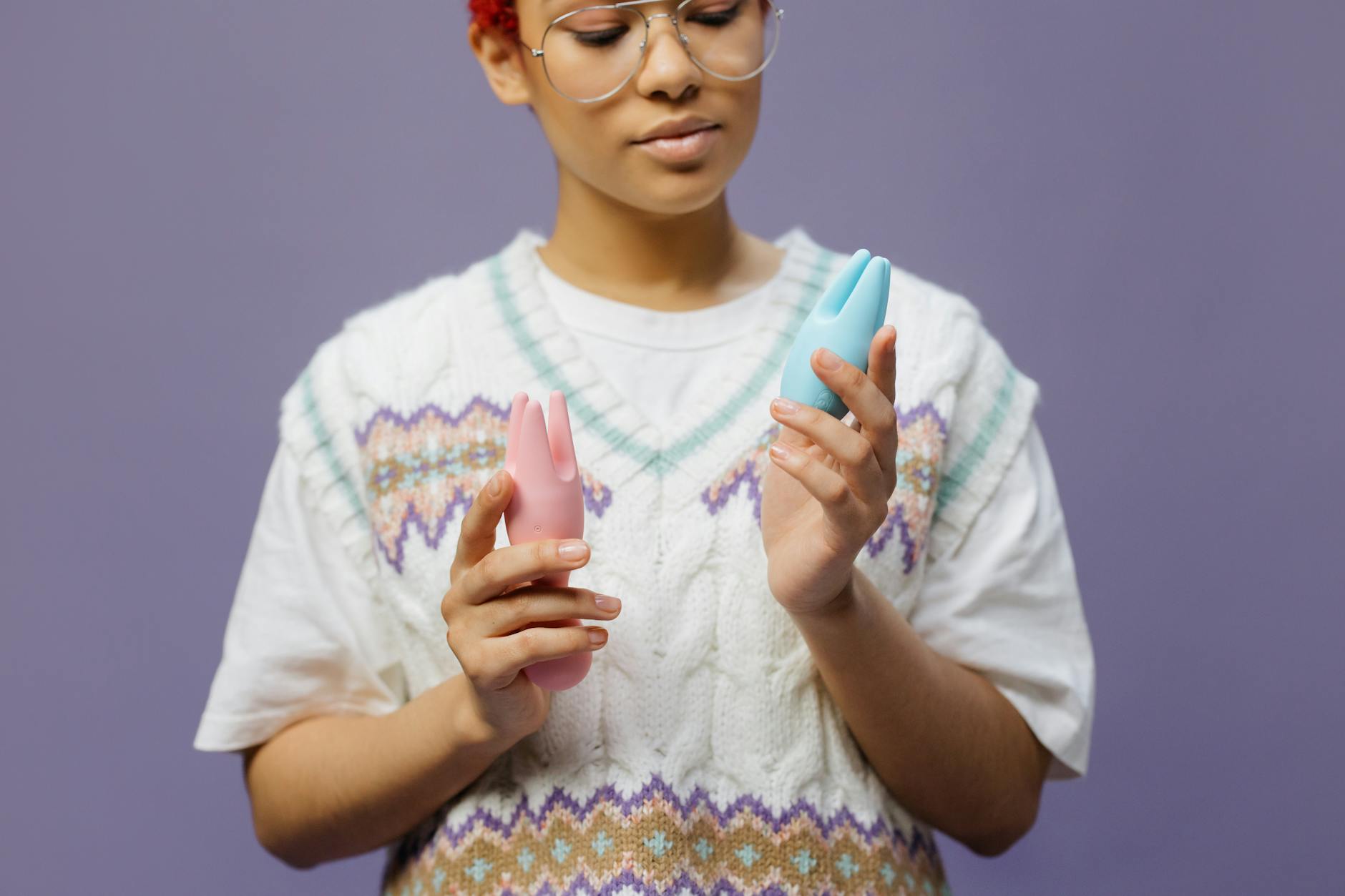
Start with a lemon sucker or entry-level lem vibrator. Something that feels approachable, not clinical. The clitoral vibrators from Hello Nancy are designed to be intuitive, not intimidating. Run it over your skin (clothed first) to get comfortable with the sensation. There's no rush.
Build a small ritual. A candle. Music you like. Wash your hands. Make it clear to your brain that this is intentional and worthy of time, not rushed or guilty. Guilt tanks arousal. Intention builds it.
Start at a low intensity and notice what feels good. This isn't about achieving an orgasm on a schedule. You're gathering information. What pressure? What rhythm? How long does it take your body to wake up? All useful.
If you orgasm, great. If you don't, also fine. The point is exploration, not performance. Even solo.
Anxiety during solo pleasure is common. Your brain might catastrophize: "What if my partner finds out and thinks I'm unfaithful?" or "What if they think this means they're not enough?"
Write those fears down. Literally. Get them out of your head. Then ask yourself: are these things your partner has actually said or done, or are they stories you're telling yourself? Most of the time, they're stories. Stories rooted in old shame, not in your actual relationship.
If your partner has actually criticized solo pleasure or made you feel shame for it, that's a different conversation. That's a relationship dynamic worth examining, possibly with a therapist. Shaming a partner's sexuality is controlling behavior, and it doesn't get better by ignoring it.
But if the anxiety is purely internal, you can talk back to it. "This is old stuff. My partner is a good person. I'm allowed to explore my body. These things can coexist."
After a few solo sessions, you might naturally want to share this with your partner. You might use a lemon vibrator together. You might keep it private. All valid. The key is that it stops being shameful either way.
Some couples find that one person's solo exploration sparks curiosity in the other. Some couples just feel safer knowing their partner is exploring pleasure independently. Some couples never talk about it again, and that's fine too. There's no right outcome.
What matters is that you've given yourself permission to know your own body. That permission radiates outward. You'll show up differently in your relationship, more confident and less desperate. That's attractive. That builds actual intimacy.
Using a lemon clitoral vibrator alone isn't a threat to your partnership. It's an investment in it. The better you know your body, the better you can ask for what you need. The less shame you carry, the more real connection you can access. Your solo pleasure and your partnered pleasure aren't competing. They're complementary.
No. Cheating involves betrayal and typically another person. Solo exploration with a toy is self-knowledge. It's not infidelity, even if society has tried to frame it that way for decades. Your body belongs to you. Using a lemon vibrator alone is just learning what brings you pleasure.
That depends on your relationship and your comfort level. Transparency is generally healthier than secrecy, but the timing and framing matter enormously. If you feel safe in your relationship, honesty usually strengthens trust. If you feel shame or fear telling them, that's worth exploring separately.
This is a values conversation, not a tech problem. A partner who feels threatened by a toy might be operating from scarcity thinking, where your pleasure somehow diminishes theirs. That belief is incorrect, but it's real to them. The conversation worth having is: "What are you actually afraid of?" Often it's not the vibrator. It's a fear of inadequacy or abandonment. Address the real fear, not the toy.
Yes. In fact, solo exploration is often the safest place to start if desire is low. There's no pressure to perform, no timeline, no accommodation needed. You're just noticing what your body responds to. A clitoral vibrator like the Lem can be particularly helpful because the suction stimulation might activate arousal differently than manual touch.
The opposite is usually true. When you know your body and trust your own pleasure, you're more present and confident with a partner. You're also less likely to resent them for not knowing your body intuitively. Self-knowledge makes partnership sex better, not worse.
Shame is a belief system, not a fact. The belief that solo pleasure is shameful probably came from religion, family culture, or media messages. You get to question that belief now. Solo exploration is normal, healthy, and part of adult sexuality. A therapist can help if the shame is deeply rooted. But starting with a simple reframe helps: "I'm learning about my body. This is an act of self-care." Repeat until you believe it.