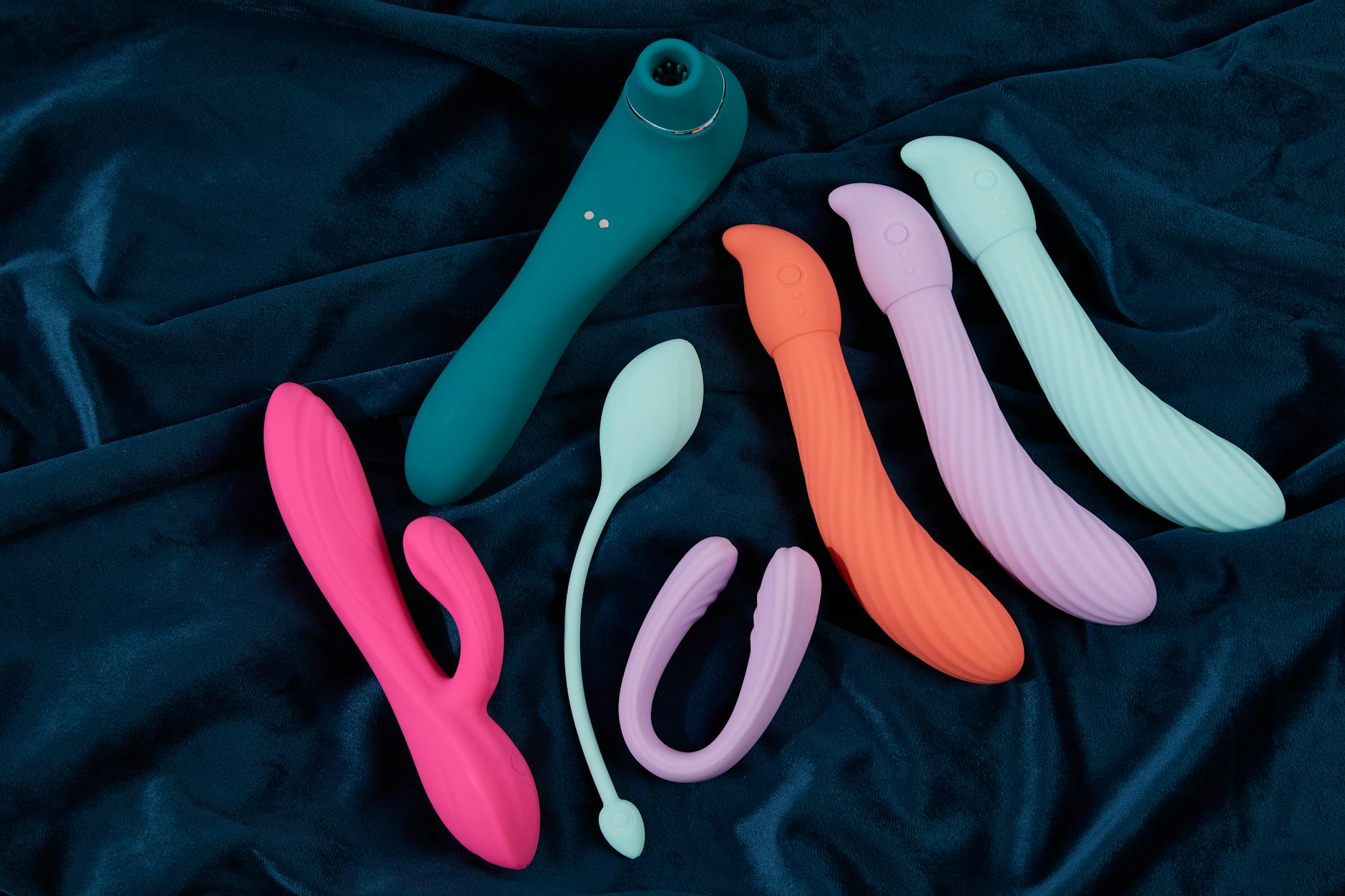
How to Use a Lemon Vibrator if You Have Painful Intercourse
Endometriosis, vaginismus, and pelvic tension make sex hurt. A lemon clitoral vibrator can help rewire your nervous system and reclaim pleasure on your terms.
Here's the thing nobody tells you: if penetration hurts, your nervous system is doing exactly what it's supposed to do. It's protecting you. The problem is that protection becomes a trap. Your pelvic floor tightens in anticipation of pain. Your body floods with cortisol instead of arousal chemicals. Sex goes from something you want to something you dread. And your partner starts to feel the distance, even if they're trying to be supportive.
A lemon clitoral vibrator, used the right way, can break that cycle. Not by forcing anything. By rewiring what your body thinks pleasure is supposed to feel like.
Three major culprits show up in my practice over and over.
Endometriosis causes physical inflammation of the tissues, especially around the pelvic organs. Deep penetration hits areas that are already angry and sensitized. The pain is real, it's tissue-level, and it's not in your head.
Vaginismus is when your pelvic floor muscles contract involuntarily at the thought of penetration, or the moment anything touches the opening. It's not a choice. It's a reflex, usually rooted in past pain, trauma, or anxiety about pain itself.
General pelvic floor tension and dysfunction can come from stress, sitting all day, past injury, or simply never learning how to relax those muscles. The pelvic floor is supposed to contract and release. When it only contracts, everything feels tight and uncomfortable.
All three situations benefit from the same principle: clitoral stimulation that bypasses penetration entirely and retrains your nervous system to associate touch with pleasure instead of pain.
A lemon clitoral vibrator, especially a suction-style device like Hello Nancy's Lem, works differently than a traditional vibrator. Instead of aggressive vibration, it uses gentle pulsing suction against the clitoris. This matters because suction is less intense than direct contact, which means less risk of overstimulation if you're dealing with vulvodynia or other sensitivity issues.
The suction also pulls blood into the clitoris gradually, which means arousal builds slowly and predictably. For people with pain-related anxiety, predictability is everything. You're not guessing whether the next second will hurt. You're in control of the pace.
Most importantly, lemon vibrators and clitoral suction toys in general create pleasure that's completely separate from penetration. You're training your nervous system: "Touch feels good. Touch equals safety." Once that pathway is solid, partnered sex becomes less fraught because you've already proven to yourself that your body can feel pleasure.
If penetration has been painful for months or years, your body doesn't trust that this will be different. So we start somewhere safe: alone, no pressure, no penetration, no partner watching and waiting.
Day one is just holding the lemon vibrator. Not using it. Looking at it. Touching it. Letting your nervous system know this object isn't a threat.
Day two or three, try it on low on your inner thigh or lower abdomen, nowhere near your vulva yet. Feel the sensation without any stakes attached.
Once that feels neutral or good, try it on the outer labia. Still on low. Spend five minutes there. Breathe. There's no orgasm goal here. You're building tolerance and positive association.
After a few sessions of that, move to the clitoris. Start with pattern 1. Stay there for two to five minutes. If you feel any anxiety or tension, pause. There's no prize for pushing through.
With vaginismus specifically, you might pair this with internal work: dilators, pelvic floor physical therapy, or both. A lemon clitoral vibrator alone won't resolve vaginismus, but it changes the emotional equation around pleasure, which makes the physical therapy more effective.
Once you're at the arousal stage, lemon vibrators become even more valuable because they let you experience pleasure without the penetration trigger that usually sets off your pain reflex.
You can explore multiple orgasms using patterns and intensity levels. The buildup is gradual. Most clitoral suction devices have 5-10 intensity settings, so you can stay in the arousal window as long as you want without jumping straight to peak sensation.
For people with endometriosis, this is especially important because deep pelvic contractions during orgasm can sometimes trigger cramping. With external clitoral stimulation, you control where the sensation lives. It stays in the clitoris and surrounding tissue. Many of my clients report that orgasms from external clitoral stimulation feel just as satisfying but without the pelvic floor tension that leads to pain afterward.
If you're in a relationship, using a lemon vibrator because penetration is painful requires a conversation that most couples skip, and that's a mistake.
Here's what that conversation should not be: "I'm sorry my body is broken. I'll try to fix it for you."
Here's what it actually should be: "Penetration has been painful for me, and I'm working on that with specific tools. One of those tools is exploring pleasure in a different way right now. This is about reclaiming my sexuality, not rejecting you."
Your partner needs to understand that a lemon clitoral vibrator is not replacing them. It's a bridge. You're building capacity and confidence so that eventually, if you want penetration again, it comes from a place of desire instead of obligation.
Some partners feel relieved. Sex has been uncomfortable for both of you. Now there's a path forward that doesn't require forcing penetration through pain.
Some partners feel displaced or worried they're doing something wrong. That's where the conversation gets real. Reassure them. Invite them into the process if you want to. Lemon vibrators work beautifully with partnered touch. Your partner can hold it while you guide the speed. They can watch you orgasm. They can feel safe knowing you're enjoying something.
But also: it's okay to use it alone first. Privacy and space are part of healing.
If pain is severe, a lemon vibrator is a starting point, not a substitute for medical care.
A pelvic floor physical therapist can evaluate whether your pelvic floor tension is the primary issue or a symptom of something else. They can teach you how to actually relax those muscles, which feels counterintuitive if you've been clenching for years.
If you have diagnosed endometriosis, your gynecologist can discuss whether hormonal options (like continuous-cycle birth control or the Mirena) might reduce inflammation enough to make penetration less painful.
For vaginismus, cognitive behavioral therapy plus gradual exposure plus physical therapy is the gold standard. A lemon clitoral vibrator fits into that protocol beautifully, but it's not the whole thing.
And if you have trauma history, a therapist trained in somatic work can help your nervous system understand that touch doesn't have to mean pain. That's slow work. It's worth it.
You won't heal in a week. You probably won't heal in a month.
But in two to three weeks of consistent, pressure-free exploration with a lemon vibrator, most of my clients report a shift. Anxiety decreases. Pleasure increases. The thought of touch stops triggering your nervous system's alarm bells.
In two to three months, many people are ready for partnered touch, and their partners report that the sex feels different because you're finally present instead of braced for pain.
After six months to a year of consistent work, depending on the underlying cause, penetration often becomes possible again, and when it does, it's genuinely pleasurable instead of something you're enduring.
That timeline assumes you're also addressing the root cause, not just the symptom. A lemon clitoral vibrator is powerful, but it's not magic. It's a tool inside a larger framework of healing.
If you're already experiencing pain during sex, introducing any penetrative object is going to trigger the same protective response. Your body sees something entering and tenses up, regardless of how gently you try.
Clitoral vibrators and clitoral suction toys bypass that trigger entirely. They work on tissue that's usually not involved in the painful sensation. They give your nervous system a chance to learn pleasure outside the context of penetration.
Once your nervous system has that reference point, partnered penetration becomes less threatening. You know what pleasure feels like now. You know your body can respond that way. That knowledge changes everything.
Yes, absolutely. In fact, clitoral stimulation is usually the first step in vaginismus treatment because it separates pleasure from the penetration fear. Just make sure you're also working with a pelvic floor PT or therapist who specializes in vaginismus. A lemon clitoral vibrator is part of the solution, not the whole solution.
No. The research on this is pretty clear. Regular clitoral stimulation doesn't cause desensitization. If anything, it increases sensitivity because you're building better blood flow and neural pathways. You might notice that after a few weeks, you need slightly longer warm-up time with a partner, but that's about preference and arousal building, not numbness.
Not if you're using it as part of a healing plan. Daily or nearly daily use for two to three weeks can actually speed up nervous system rewiring. After that, you can scale back to a few times a week. The goal is progress, not dependency. If you're using it every day a year later with no improvement, that signals you need a different approach or additional professional support.
Then you've learned something valuable: your nervous system needs an even gentler approach. Skip the vibrator for now. Try manual exploration, or work with a pelvic floor PT on tension release first. Sometimes people need to build tolerance to touch before adding any device. That's not failure. That's data.
Yes, and this can actually be really healing because it separates the person you're intimate with from the pain. But communicate first. Your partner should know they're not going to pressure you into penetration. They're going to focus on external pleasure and nothing else. Many couples find this is where real intimacy returns because sex stops being about performance and penetration, and starts being about connection and sensation.
If the pain is tied to anxiety, pelvic floor tension, vaginismus, or external sensitivity, a lemon clitoral vibrator will help. If the pain is from deep penetration hitting inflamed tissue (like with endometriosis), external clitoral stimulation bypasses that trigger. But if your pain is from infection, scarring, or severe inflammation that needs medical intervention, you need a doctor first. A lemon vibrator works best alongside other treatment, not instead of it.