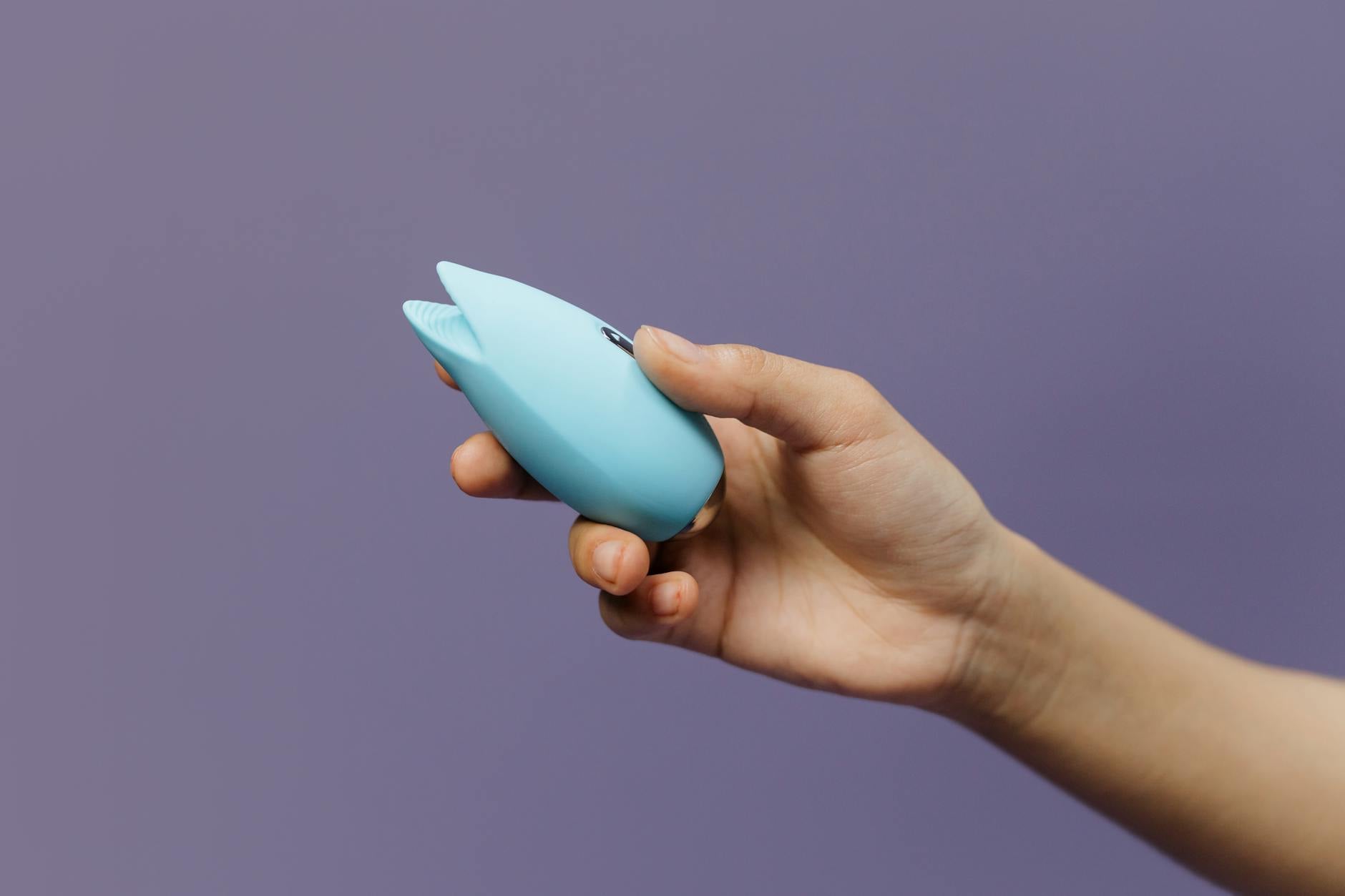
How to Use Lemon Vibrators When Your Partner Wants Them in Shared Pleasure
Your partner is interested in bringing a lemon vibrator into your intimacy. Here's how to navigate the conversation, the first time, and the adjustment without losing connection.
Your partner brought it up. Maybe casually. Maybe they were nervous. Either way, there's now a question in the room: do we try a lemon vibrator together? And if we do, what does that actually mean for us?
Here's the thing that gets glossed over: this isn't really about the toy. It's about what your partner is trying to ask you. Usually it's one of three things. They want you to experience more pleasure. They want to feel more connected during sex. Or they're curious about something and they want you to be curious with them. Knowing which one it is makes everything else easier.
There's a myth that partners suggest vibrators because they feel like they're not enough. That's rarely true. What's actually happening is more interesting.
Most people who suggest bringing in a lemon clitoral vibrator are trying to solve a specific problem. Maybe you have difficulty orgasming during partnered sex, and they want to help you get there. Maybe the sensation has shifted over time, and they've noticed you seem less present. Maybe they read something about how many people don't experience orgasm through penetration alone, and they realized you've never had a way to experience pleasure that works for your body. Maybe they just think it looks fun and want to explore together.
The reason I'm spelling this out is because you probably have a story running in your head right now about what the suggestion means. Get curious about their actual story instead. Ask them directly: "What made you want to try this?" Listen to the answer without defending or explaining yourself. This one conversation prevents weeks of weird tension.
If you're interested, say yes. If you're not, say that too. Both are fine. But don't answer right away with logistics. Answer with the actual thing.
"I'm nervous about it, but I'm willing to try" is a real answer. "I like the idea of us exploring together" is real. "I'm not sure I want a vibrator in bed, but I'm open to talking more" is also real. Avoid "yeah, sure, whatever you want." That lands differently than it sounds, and it creates space for your partner to feel like they're pushing you.
Once you've said yes, the real conversation happens next. Ask these things:
How do you imagine us using it? Are you thinking it's something you do to me, or something I use, or something we figure out together? This clarifies expectations and also tells you whether your partner has actually thought through the logistics or just liked the idea.
What do you want to feel different about our sex? This gets at the actual friction, not the toy. If the answer is "I want to see you orgasm more easily," that's different than "I want us to spend more time in bed." Different problems, different approach.
What if it feels weird the first time? This permission slip is huge. You're both saying in advance that awkward is allowed. You might laugh. You might need to pause and adjust. The vibrator might not feel how you expected. That's all completely normal, and you're already agreeing to navigate it together.
You don't need to have an orgasm with a lemon clitoral vibrator alone before using it with your partner. That's not a prerequisite. Some people like to explore solo first just to know what the sensation is like. Some would rather discover it together. Both are completely valid.
If you do want to try solo first, give yourself 15 to 20 minutes in a space where you're not worried about being interrupted. Start at the lower settings. The sensation is different from fingers or penetration. A lemon vibrator uses suction and pulsing rather than vibration, which means it feels concentrated and rhythmic. There's no "wrong" way to use it. You're just getting to know the sensation.
If you'd rather skip this and just try it together, that's fine too. Tell your partner that's your preference. It removes the performance pressure of "having an orgasm" and frames the experience as exploration instead.
Timing. Don't introduce the toy five minutes before you want to have sex. You need space to be curious and a little awkward without it feeling like there's a deadline. Try it when you have time. Maybe a weekend afternoon, or whenever you two aren't rushed.
Connection first. Spend 10 to 15 minutes just being close before the toy shows up. This is not foreplay in the traditional sense. It's just you two touching, kissing, talking. This grounds you back in each other instead of the novelty of the thing.
Communication. Once you're warmed up, your partner can ask: "Should I try it now?" or "Want me to go slow?" or "How does that feel?" These aren't clinical. They're just checking in. You can answer with "a little higher," "softer," "just stay there," "that's weird but good weird." Your voice is the remote control. The toy doesn't override your experience. Your experience directs the toy.
What if nothing happens. You might not orgasm. You might feel self-conscious. You might love it immediately. All of these are fine. The point of the first time isn't to have the best sex of your life. The point is to have tried something together and to have paid attention to each other while doing it. That's already a win.
Here's what I see in my practice over and over. One partner brings up a vibrator because they want to deepen pleasure. The other partner hears it as "I'm not satisfying you." Both things are true sometimes, and sometimes only one is.
The thing that matters is separating the two conversations. "I want us to explore lemon vibrators together" is about curiosity and expansion. "I'm struggling because you don't orgasm during sex" is a real concern that also deserves a real conversation, but it's a different one.
If you're feeling insecure about your partner's suggestion, say that. "I felt a little weird when you brought this up, and I want to talk about it" opens the door. Your partner will probably say something like "I just want you to feel good," which might be true and also might miss the actual tender thing you needed to hear, which is "you already matter to me, and I want to expand what we can do together."
You might need to ask for that explicitly. That's not weak. That's asking for what you actually need.
You don't need to use the toy every time you have sex. Some couples use it occasionally. Some find it becomes part of their regular routine. Some try it once and decide it's not for them, and that's equally fine.
What matters is checking in a few days later, when the newness has worn off and you're just talking. "How did that feel to you?" "Do you want to try again?" "Was there anything that felt off?" These conversations are where couples either deepen their connection or discover they need to adjust something.
Sometimes the vibrator isn't the issue. Sometimes introducing it reveals that one partner wants more intimacy, or that communication has gotten rusty, or that there's friction about pleasure that existed before the toy and will exist after. That's okay information to have. It's information that helps you actually fix something.
If this brings up a lot of resistance, shame, or feelings that you can't quite name, that's worth exploring with someone trained in intimacy and relationships. There's no shame in that. A lot of people have complicated feelings about pleasure, about being desired, about trying new things. A good couples therapist can help you both understand what's underneath the initial reaction and move through it together.
You might also find that using lemon vibrators actually opens up a new level of conversation with your partner about pleasure, desire, and vulnerability. That's the real gift. The toy is just the doorway.
That's actually really common. Some people are more comfortable being the receiver of pleasure than the giver, especially if the toy feels unfamiliar. You can absolutely use the vibrator on yourself while your partner is inside you or beside you. You can also ask your partner to hold it while you guide the pressure and movement. It doesn't have to be one person in control.
It depends on what's broken. If the issue is that you haven't orgasmed and now you can, yes, that changes things. If the issue is that you're not talking to each other, the vibrator might help you start, but it won't fix the communication problem. Use it as an invitation to be closer and more honest with each other, and you'll see real shifts.
You're not broken. Most people with vulvas don't orgasm from penetration alone. The architecture of pleasure is just different. If anything, discovering what works for you is the path to better sex with your partner. Once you know how your body responds, you can teach them what helps.
Not even a little. Long-term couples often benefit most from this kind of exploration because you already have foundation and trust. You're not figuring out whether you like each other. You're just getting curious about what else is possible. That's actually the easiest time to try something new.
Say that clearly. "I appreciate you wanting to explore this, and it's not something I want to do" is a complete sentence. A good partner will hear that and let it go. If they keep pushing, that's a different problem about boundaries and respect, and that's worth addressing separately. But a simple no is enough.
They can be a catalyst, but they're not a cure-all. A rut usually means something else has shifted. Maybe you're stressed. Maybe you're not feeling close. Maybe desire naturally ebbed as the relationship settled. A vibrator might jumpstart things, but the real fix is usually about reconnecting. Use the toy as an excuse to be playful together again, and see what opens up from there.
Your partner suggested a lemon vibrator because they want to experience pleasure with you. That's actually a beautiful thing. It means they're not resigned to how things are. They think there's more to discover together.
You get to choose whether you want to explore that with them. But if you do, the toy itself is the small part. The real work is the conversation, the vulnerability, and the willingness to be curious about each other's bodies and desires.