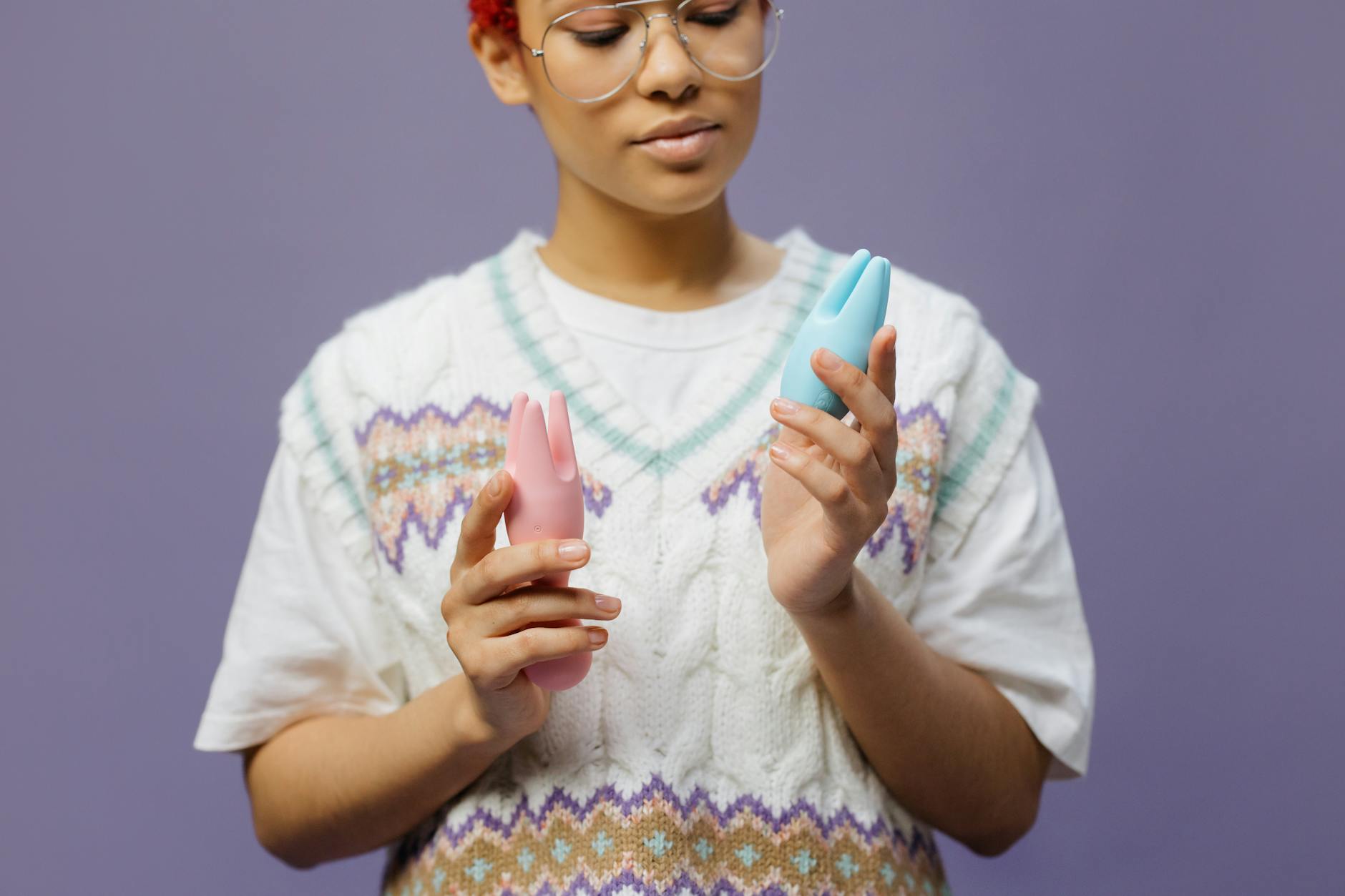
How to Use Lemon Vibrators When You Have Hormonal Sensitivity
Your body isn't broken when pleasure shifts across your cycle. It's just responding to real chemical changes. Here's how to work with them instead of against them.
Your body doesn't respond the same way to touch, sensation, or stimulation every single day of your cycle. That's not a limitation or something to work around. That's chemistry, and once you understand the pattern, you can actually use it to your advantage.
Hormonal sensitivity is normal. In fact, it's evidence that your body is doing exactly what it's supposed to do. The catch is that most people are taught to ignore these shifts, which means they either blame themselves when pleasure feels different or they assume something's broken.
During the follicular phase (days 1 to about 14 of your cycle), estrogen is rising. Your skin is more sensitive, nerve endings are more responsive, and you typically need less stimulation to build arousal. The clitoral tissue swells slightly as blood flow increases. This is the phase where many people find they can orgasm faster and with less effort.
Then ovulation happens. For about 48 hours around day 14, testosterone spikes along with estrogen. This is when many people report the strongest desire, the quickest response, and the most intense sensations overall.
The luteal phase (roughly day 15 to 28) is different. Progesterone rises as estrogen drops. Sensation becomes duller. It takes longer to warm up. The clitoris is less swollen. Orgasms feel less sharp but sometimes deeper. And many people find they need more direct pressure, longer foreplay, and more patience.
The Lem and other lemon-style clitoral vibrators use suction and pulse patterns rather than direct vibration. That matters for hormonal sensitivity because suction stimulates nerves in a gentler, more diffuse way than traditional vibration does.
During high-estrogen phases (follicular and ovulation), you may find the Lem's lower intensity settings are almost too gentle. You might jump straight to patterns 5 or 6. The suction feels perfect because your tissue is already responsive.
During the luteal phase and menstruation, the Lem becomes the tool that actually works when nothing else does. The suction doesn't rely on surface sensitivity. It reaches deeper nerve tissue, and it's harder to numb out because the sensation isn't friction-based. Many of my clients report that during their luteal phase, the Lem is the only toy that reliably gets them there.
Here's how to adapt your practice across your month.
Menstrual phase (bleeding days, roughly 3 to 7 days).
Your hormones are at their lowest. Many people feel less interested in pleasure during this time, and that's completely normal. If you do want to masturbate, go slow. Start with the Lem on pattern 1 or 2. Your tissue is sensitive, and you may feel a bit tender. Skip penetration if it feels uncomfortable. Some people find that the suction actually helps with cramping, so if that's you, use it as a self-care tool rather than something performance-based. There's no finish line here.
Follicular phase (days 8 to 13, leading up to ovulation).
This is when most people feel most responsive. Your clitoris is fuller. Your skin is more sensitive. You might find that you can orgasm in five minutes flat. Use that. Don't rush to try new things or push intensity just because it's easy. Let yourself enjoy the ease. The Lem works beautifully here on patterns 3 to 5. You can explore longer sessions or try combining it with other toys if you're curious. Your nervous system is primed for pleasure, so this is a good phase for experimentation.
Ovulation window (day 14, roughly 24 to 48 hours).
This is the peak. Testosterone is surging, desire is at its strongest, and most people report their most intense sensations. If you've ever felt like the Lem was too subtle, this is the phase where it might be. Try patterns 6 or 7. Experiment with longer sessions or add a second toy. Your body is literally wired for maximal pleasure right now. This is also a good phase to practice with a partner if you want to combine clitoral stimulation with penetration, because your nervous system is most primed for complex sensation.
Luteal phase (days 15 to 27).
Every day feels a little different here, and that's totally normal. In the early luteal phase (days 15 to 21), you may still feel fairly responsive, but you'll notice it's gentler than ovulation. Take your time. Use patterns 4 to 6. As you move deeper into the luteal phase, you might find yourself needing patterns 2 to 4 again. The sensation dulls, so you need more time to build arousal. Extend your warm-up. Thirty minutes of slow foreplay becomes your friend. The Lem's suction is particularly valuable here because it doesn't depend on sharp surface sensation. You can feel it even when your general nerve response is lower.
Cycle syncing only works if you're not fighting your body's actual state. If your luteal phase always feels like a failure compared to ovulation, you'll create tension that makes pleasure harder to access.
The reframe: follicular and ovulatory phases are for quantity. Luteal is for quality. Peak arousal isn't the goal every time. Pleasure takes different forms across your month, and that's not a problem to fix.
Photo by Frank Schrader on Pexels
One more thing: if you're tracking your cycle, you can actually predict these shifts instead of being surprised by them. Apps like Flo or even a simple calendar let you log which phase you're in and how pleasure felt. After two or three cycles, patterns emerge. You'll know on day 18 that you'll need more time and gentler patterns. That knowledge alone reduces frustration.
Here's the distinction: normal hormonal shifts are one thing. Feeling physically unable to experience pleasure in your luteal phase, or having pain during certain phases, is another.
If sensation loss is so severe that even the Lem on the highest setting feels like nothing, that might point to something like low progesterone or thyroid dysregulation. That's worth discussing with a doctor.
If one phase feels painful during any kind of stimulation, that's also worth checking out. Endometriosis, PCOS, and other hormonal conditions can genuinely change how stimulation feels.
The lemon vibrators and other tools help most people work with normal cycle variation. They won't fix an underlying condition, but knowing the difference helps you get the right support.
Most people approach their pleasure like it should be constant and reliable, like their favorite sweater. But your body is hormonal. It's supposed to shift. The moment you stop treating those shifts as failures and start treating them as information, pleasure becomes easier and more interesting.
With a lemon clitoral vibrator and a basic understanding of your cycle, you're not adapting to a broken body. You're working with an intelligent system that's doing exactly what it's designed to do. That's not a limitation. That's the whole point.
Normal hormonal sensitivity means your pleasure response shifts in predictable ways across your cycle. You might notice that ovulation week feels easiest and luteal feels harder, but you can still experience pleasure in both phases. If sensation is completely gone, if pain appears and disappears with your cycle, or if one phase makes pleasure impossible, check in with a doctor. Most people don't realize that hormonal imbalances show up in sexual response before anywhere else. It's often one of the first signals that something is off balance.
Absolutely. There's nothing wrong with using any toy during menstruation. Some people find that suction-based stimulation actually feels soothing during this phase. Start with lower intensity settings since tissue sensitivity is higher. If you have heavy flow and want to avoid mess, consider using it in the shower. The key is comfort, not rules.
During the luteal phase, tissue is less engorged and progesterone mutes nerve response. The same intensity that felt perfect during ovulation might feel jarring now. This is totally normal. Drop down to lower patterns, extend your warm-up time, and remember that luteal phase pleasure often requires more patience but can feel surprisingly deep. Your body isn't broken. It's just operating under different hormonal conditions.
Cycle syncing works with any toy, but some tools are better matched to different phases. Suction vibrators like the Lem work especially well during luteal phases because they don't depend on surface sensitivity. Vibrators with multiple intensity levels give you flexibility across the month. App-controlled toys let partners sync stimulation to your cycle if you want that. The Lem is popular for this specifically because its range of patterns covers both high-sensation phases and low-sensation phases well.
If your cycle is irregular, you can't predict phases by calendar date, but you can still feel the shift happening in real time. Pay attention to what your body needs each day. Maybe you keep a simple note: "today needed pattern 2, felt slow to warm up" versus "today jumped to pattern 6 immediately." After a few cycles, you might notice that 25-day cycles and 35-day cycles share similar patterns, even if the timing is different. Irregular cycles are common and don't mean cycle syncing won't work. It just means you're reading your body's feedback in the moment rather than predicting it in advance.
Yes. Hormonal birth control suppresses or flattens the natural hormone fluctuations that happen across a cycle. If you're on birth control, you might not experience the dramatic sensitivity shifts described here. That doesn't mean toys don't feel good. It just means the monthly variability might be much smaller. Many people on hormonal contraceptives report consistent sensation across the month. Some report that overall sensitivity is slightly lower than off hormones. If you ever stop taking birth control, you'll likely notice the cycle shifts returning. That's not a sign something broke. It's your body's natural rhythm coming back.
Your cycle isn't an obstacle to pleasure. It's the blueprint for it. Once you stop fighting the shifts and start working with them, a lemon vibrator becomes even more useful because you're using it strategically, not just hoping it works the same way every single day. That's not compromise. That's alignment.