One partner reaches climax in three minutes. The other needs twenty. And suddenly the person who finishes quickly feels guilty, the person who takes longer feels rushed, and both of you are having sex that feels like a race with a finish line nobody wanted.
Orgasm isn't a switch. It's a dial. And everyone's dial has a different baseline speed, plus a bunch of variables that change depending on stress, sleep, hormones, your mental load that day, and how long it's been since you two actually connected emotionally.
Add this to the mix: whoever has a vulva typically takes longer to reach orgasm than whoever has a penis. That's not universal, but it's common enough that sex therapists built careers around it. The clinical term is the "orgasm gap." The lived experience is frustration.
But here's the thing. If you're both trying to come at the same time through the same activity, you're designing for nobody. You're designing for a fantasy timing that probably doesn't exist in your actual bodies.
Most couples assume there's one acceptable way to have sex: foreplay, then penetration, then orgasm happens at the end, ideally together. When that doesn't work, somebody feels broken.
Nobody's broken. The sequence is just wrong for your bodies.
Here's what I see shift when couples start thinking in sequences instead of timelines. Partner A finishes in three minutes. Instead of feeling guilty, they use that quick arousal as momentum. Partner B takes twenty. Instead of feeling rushed, they get a full fifteen minutes of undivided attention and stimulation that actually matches their body's needs.
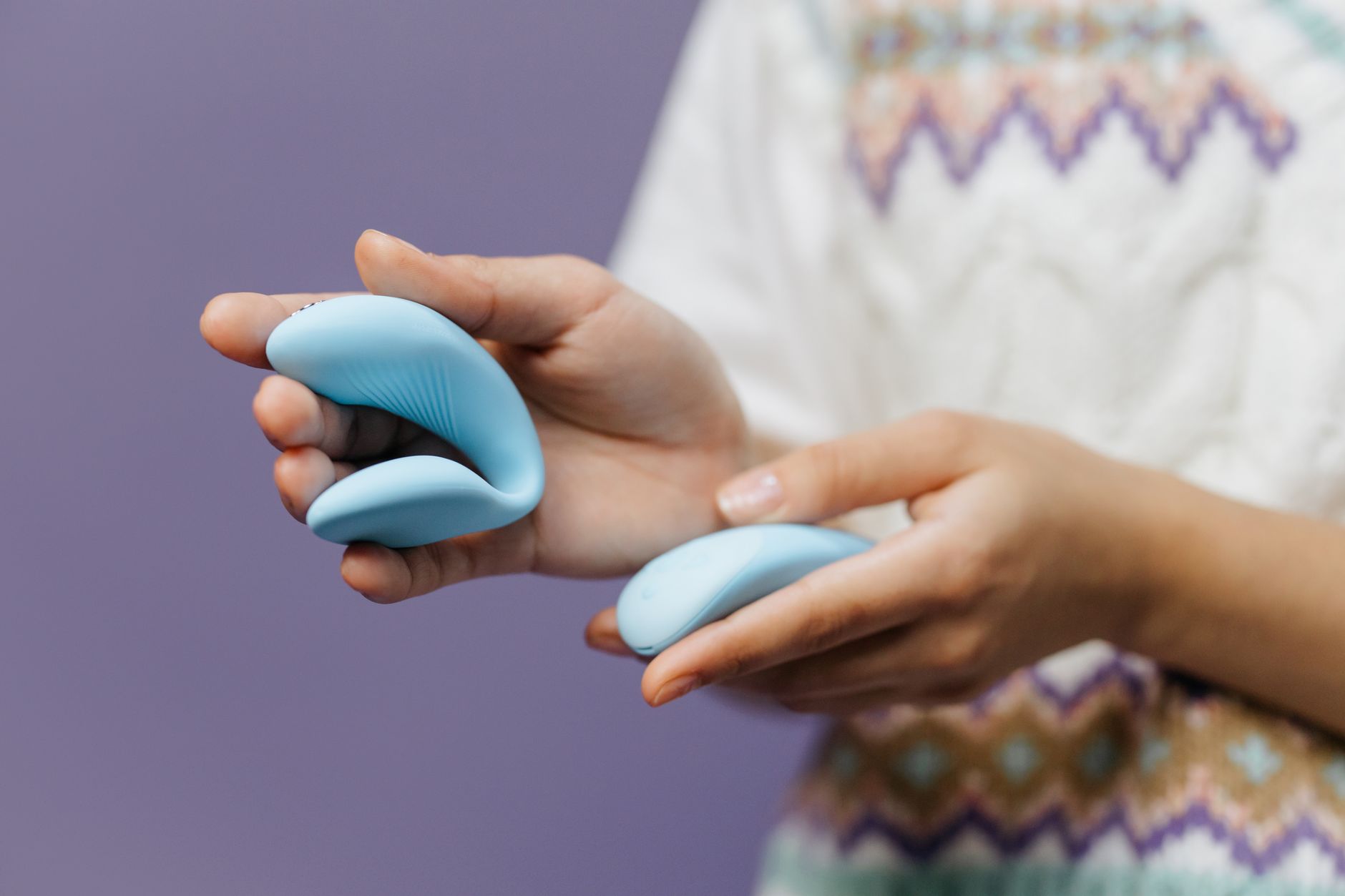
Lemon vibrators fit into this reframe because they let you decouple your orgasm from your partner's.
One strong approach: penetration doesn't have to be the main event anymore.
Instead, it becomes one option in a longer sequence. Here's a real-world timeline that works for a lot of couples:
Minutes 0-5: Partner A gets stimulated to the point where they're close but not finished. A clitoral vibrator like the Lem is perfect here because it delivers concentrated stimulation without requiring penetration yet.
Minutes 5-10: Shift focus entirely. Partner B is now centered. Partner A stays engaged (hands, touch, presence) but isn't the one getting direct stimulation anymore. Partner B receives whatever builds arousal for them. This might be penetration, hands, a lemon sucker vibrator, or all three in sequence.
Minutes 10-20: Partner B is building toward orgasm. Partner A can re-enter the picture here. If Partner A finishes first, they finish. They don't disappear. Many people find that coming actually sharpens their focus and makes them better partners in the moment.
Minutes 20+: Partner B reaches orgasm with full attention and whatever stimulation works. Partner A is present, hands free to touch, no time pressure because the timeline is already real and known.
The difference between this and what you might be doing now: it's explicit. You talk about it before you get naked. You're both aware that different bodies need different paces, and you're treating that as a feature, not a bug.
A lemon clitoral vibrator shortens the time needed for arousal to build. It doesn't always lead to faster orgasms, but it does deliver concentrated stimulation that a hand alone can't match. That matters when you're trying to sync two different timelines.
Let me be specific. If Partner B's baseline is twenty minutes and Partner A's is three, you've got a seventeen-minute gap. A clitoral vibrator doesn't usually close that gap entirely, but it can narrow it. Maybe now Partner B gets to orgasm in fifteen minutes instead of twenty. That's a real win.
The other thing vibrators do: they reduce the pressure on Partner A to "perform" their stimulation. Your hand gets tired. Your arm cramps. You second-guess whether what you're doing is actually working. A vibrator removes that equation. It works. It's consistent. Partner A can relax into being present instead of anxious about execution.
Most couples avoid talking about orgasm timing because it feels like criticizing someone's body. It isn't. It's describing a logistics problem that exists in every partnership at some point.
Start outside the bedroom. Maybe over coffee or a walk. Say something like: "I've been thinking about our sex life, and I realized I feel rushed sometimes" or "I notice we're both kind of performing a timeline that doesn't actually work for either of us. Can we rethink it?"
Then describe what you actually want. Not "I need you to take less time" but "I'd love for us to have time where the focus is entirely on you, without me worrying about finishing first. How would that feel?"
Introduce the tool after you've introduced the conversation. That's when something like a lemon vibrator makes sense. It's not a fix for a broken body. It's a tool for a new sequence you've both decided on.
Here's what I've noticed in my practice. Couples who succeed with mismatched timelines aren't the ones with the most compatible bodies. They're the ones who stopped making someone's orgasm speed a referendum on the relationship.
If you come quickly, that doesn't mean you don't care about your partner's pleasure. If you take longer, that doesn't mean you're broken or too demanding. You have different dial settings. That's real. That's fine.
The couples who struggle are the ones still trying to have simultaneous orgasm every single time, or the ones who've stopped trying altogether because they decided it was impossible. Both extremes miss the middle ground: a sequence that works for your actual bodies, with tools and presence that match.
Once you've reframed the timeline as a feature you can design around instead of a flaw you need to hide, sex gets so much simpler. You know what you're doing. You know it'll work. And you're both showing up for each other instead of against each other.
You'll probably find that after a few conversations and a few times trying this, the pressure lifts. Penetration might feel different because you're not frantically trying to sync two incompatible arousal curves anymore. You'll discover positions or sequences that actually match your timelines instead of fighting them.
And here's the thing that surprises people: once the performance pressure drops, timelines often shift anyway. Not always. But the relief alone sometimes changes the equation. When you're not anxious about coming too fast or not fast enough, your nervous system relaxes. Your body responds differently. Not because you're "fixed," but because you stopped treating it like a problem.
If you're looking to start experimenting with clitoral vibrators as part of a new sequence, the Lem is built exactly for this use case. Concentrated stimulation, easy to hand off between partners, no guesswork about whether it's working. But honestly, the vibrator is secondary to the conversation. The conversation is the whole point.
The most obvious sign: one of you consistently finishes before the other, and it's creating tension or guilt. You might notice resentment creeping in ("Why does this always take so long?" or "Why do you always rush?") or disconnection (one person checking out or withdrawing during sex). Another sign is if you've stopped trying certain kinds of sex because the timing never works. If you're both satisfied but you've got a clear gap in how long arousal takes, that's a timeline mismatch. It's only a problem if it's affecting your connection.
They can narrow it, not always close it entirely. A lemon vibrator or clitoral sucker delivers concentrated stimulation that fingers or a hand can't match, which can mean faster arousal buildup. But that doesn't mean everyone who uses one will suddenly have synchronized orgasms. The goal isn't simultaneity. The goal is intentional sequencing that works for both of you. If a vibrator helps Partner B reach orgasm a few minutes faster while Partner A stays engaged instead of anxious, that's a win.
That usually means the conversation hasn't happened yet. If you finish first and your partner suddenly feels less wanted, the issue isn't the timing. It's that you haven't both agreed the timing is okay. Once you have that conversation and you've designed a sequence together, finishing first becomes neutral. You might stay in the bed, keep touching, keep being present. Or you might literally step back and let your partner have focused time. But you're both choosing it instead of one person experiencing it as abandonment.
Completely normal. Arousal depends on nervous system baseline, hormone levels, sleep, stress, relationship satisfaction, what you ate that day, and about a hundred other variables. It's also not fixed. Your timeline might shift with medication, life stress, age, or just being in a different part of your menstrual cycle. The couples who manage this well treat it as a known variable to work around, not a character flaw to fix.
As often as it helps. Some couples use one every single time because it works. Others use one sometimes as part of exploring different sequences. There's no "right" frequency. What matters is that it feels good, it's part of a conversation you've both had, and it's serving the sequence you designed together, not replacing communication or presence.
Yes, if you frame it right. Don't introduce it as a fix for something being wrong with them. Introduce it after you've had the conversation about timelines and sequences. Say something like: "I want to try something that might actually work better for how our bodies operate." Framing it as a tool for the sequence you've both designed removes the implication that anyone's inadequate. If your partner is nervous, you might let them hold it first, let them feel how it works on their hand, let them control it. Turning it into an exploration instead of a fix shifts the whole dynamic.
Your orgasm timing isn't a flaw in your relationship. It's just information. And once you start using that information to design better sequences instead of trying to hide it, everything changes.