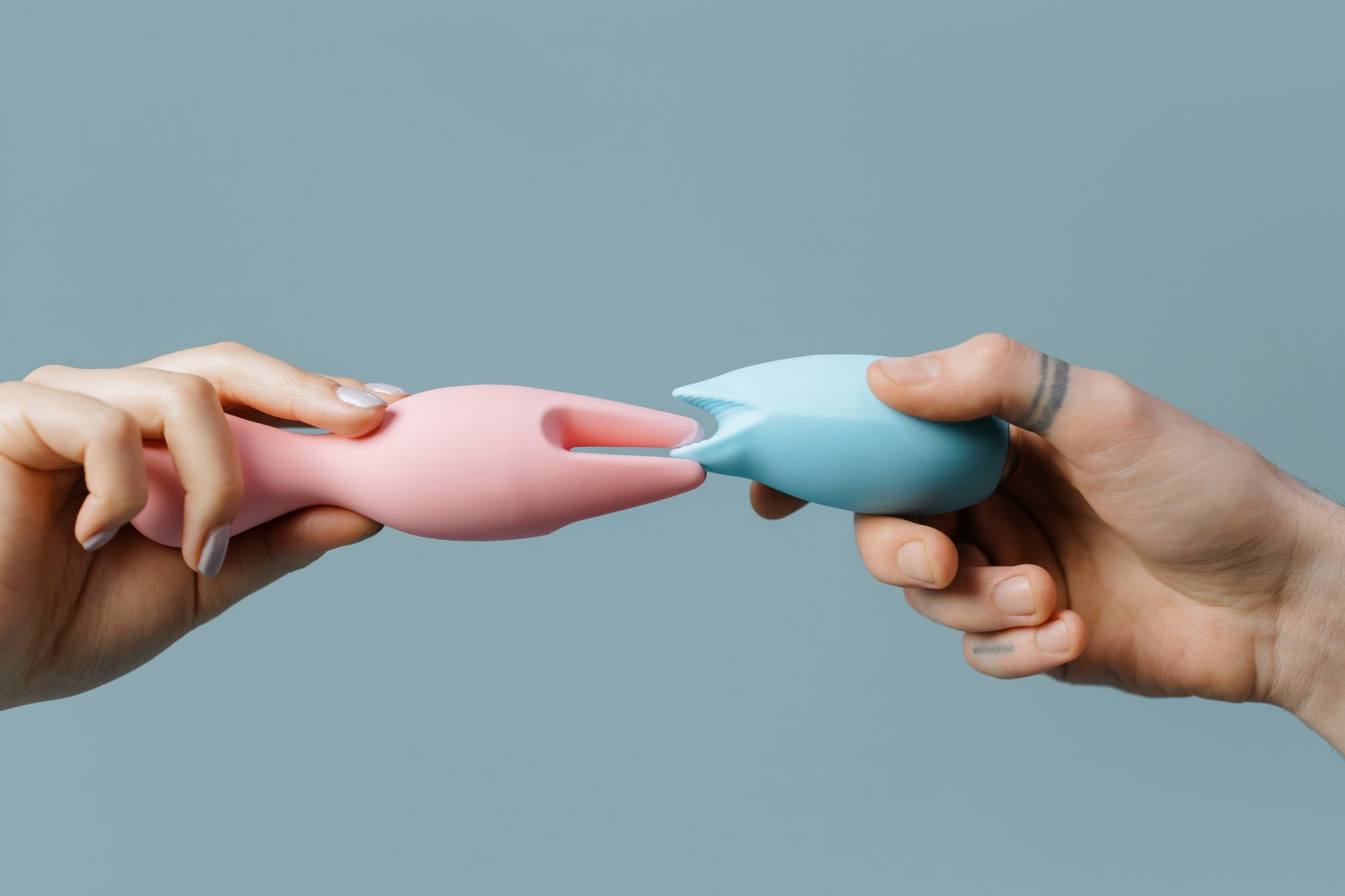
How to Use Lemon Vibrators When Your Partner's Orgasm Takes Much Longer Than Yours
When pleasure timelines don't match, lemon clitoral vibrators solve the problem most couples avoid talking about. Here's the framework that actually works.
One of you finishes in five minutes. The other needs twenty. Or maybe it's the opposite, and you're lying there afterward feeling awkward, unsure whether to stay present or roll over. This isn't a sign something's broken. It's actually one of the most common friction points in long-term relationships, and almost nobody talks about it directly.
Here's what happens instead: the faster partner learns to wait, feel guilty for waiting, or fake it. The slower partner feels rushed, pressured, or like they're failing. Sex becomes less about pleasure and more about synchronization. And then resentment settles in quietly, without either of you naming it.
Lemon vibrators, specifically the suction-based clitoral stimulation they provide, change this dynamic entirely. They let you both have separate pleasure timelines while still being connected.
There's no single reason. Sometimes it's neurological. The nervous system processes stimulation at different speeds. Sometimes it's hormonal. Testosterone, cortisol, and even thyroid function shape how quickly arousal builds and peaks.
Often it's psychological. One partner might have been conditioned early on to finish quickly (anxiety about performance, early sexual experiences, past relationships). The other might have learned to slow down, hold back, or require specific mental conditions to let go.
And sometimes it's just structural. Penis-in-vagina sex may work quickly for one body and require much longer for another. Clitoral stimulation alone might get one person there in three minutes and take another fifteen.
The problem isn't the variation. The problem is pretending it doesn't exist and then both of you working against your own bodies to fake synchrony.
When both of you are focused on matching each other's pace, nobody's actually feeling pleasure anymore. You're running a calculation. The faster partner is doing mental math, checking in, wondering if they should stop or slow down. The slower partner is checking the clock, wondering if they should speed up or just finish.
This is the opposite of what good sex requires. Your nervous system needs permission to drop into sensation, not divide attention between your body and a timeline.
Lemon clitoral vibrators fix this by introducing a third element that's not about synchrony at all. It's about two separate, parallel pleasure experiences happening at the same time.
Here's the framework that works: one partner uses the lemon vibrator for their own pleasure while the other partner engages however they naturally do. You're not trying to time anything. You're not trying to finish together. You're both pursuing your own orgasm at your own pace.
This sounds simple but it requires a mental shift. You have to stop treating orgasm as a shared finish line and start treating it as two independent events that happen to occur while you're intimate.
The lemon vibrator becomes permission. It says: your body doesn't need to wait. Your timing is okay. You don't need to rush or hold back. Just follow what feels good.
For the partner who finishes quickly: you get to use the vibrator, have your orgasm, and then shift into a different mode of presence with your partner. You're not done with intimacy. You're done with that specific type of stimulation, but you can touch them, watch them, stay connected while they continue.
For the partner who takes longer: you get to pursue your orgasm without the pressure of waiting or the guilt of making your partner wait. You have time. The vibrator isn't pulling your partner away from you; it's actually giving you both more freedom.
A lemon clitoral vibrator uses suction rather than direct vibration. This matters for timing because it creates a different nervous system response than traditional vibrators.
Direct vibration can feel intense and overstimulating when you're trying to extend pleasure. Suction creates a gentler, more sustained sensation that feels good whether you're chasing an orgasm or simply maintaining arousal while your partner continues.
The lemon vibrator is also small and ergonomic. You can use it one-handed or pass it back and forth. It doesn't require repositioning the whole body. This keeps both partners physically close and emotionally connected even while pursuing separate pleasure timelines.
Because the sensation is less relentlessly intense than traditional vibrators, it also gives you more control. You can dial down the intensity if you want to extend your experience, or go harder if you want to finish faster. That control is key when you're coordinating two different bodies in the same bed.
Before you introduce any toy, you need to name the timing issue directly. Not in a sex moment. Not in the shower. In a regular conversation, clothed, on the couch.
Say something like: "I've noticed our bodies work at pretty different speeds. I want to find a way that works better for both of us where neither of us feels rushed."
Then listen. Ask if your partner has noticed it too. Ask what it feels like for them. Ask if they feel pressured.
This conversation is actually more important than the toy. The toy is just the tool that makes the new framework possible. But the framework itself starts with both of you agreeing that separate timelines are okay.
Once you've had that conversation, introducing the lemon vibrator becomes straightforward. You're not fixing a problem. You're implementing a solution you've already agreed on.
If you finish much faster than your partner: use the lemon vibrator first. Have your orgasm. Then set it aside and stay present with your partner however feels right. That might be touching them, watching them, talking to them, or just being close. Many partners actually enjoy this because they get to focus on their own pleasure without worrying about whether their partner is bored or impatient.
If your partner finishes much faster than you: they use the vibrator first. Then you have uninterrupted time to pursue your own orgasm at your pace. They can use their hands, mouth, or just presence while you do your thing. This often feels less pressured than traditional partnered sex because you're not trying to coordinate.
If the timing is wildly different but you want to orgasm at the same time occasionally: build separate arousal tracks for most of the encounter, then use the vibrator together at the end to sync up for a final shared moment. This works because you're not forcing the timing; you're letting it happen naturally once you're both close.
If penetration is part of your sex life: lemon clitoral vibrators work beautifully alongside it. They let the receiving partner have consistent clitoral stimulation while the giving partner does their own thing. This is actually how many couples solve the problem that one person can orgasm from penetration alone and the other cannot.
Separately usually works better when the timing gap is large (one person needs 5 minutes, another needs 20). One partner has their experience, then shifts into a supporting role while the other continues. This feels less performance-y and more intimate.
Together works better when the gap is smaller (one needs 10 minutes, another needs 15). You can time it so you're both building toward a finish in roughly the same window. The faster partner can ease off intensity while the slower partner ramps up, and you meet in the middle.
Experiment. Try it separately. Try it together. Notice what feels better to both of you. There's no single right answer. The right answer is whatever reduces pressure and increases actual pleasure.
When you stop pretending your bodies are the same, something shifts. You start accepting other differences more easily too. The way your partner likes mornings while you're a night person. The way they need decompression time while you want to talk right away. The way they process emotions differently than you do.
Timing mismatches in sex are just one version of a much larger truth: your partner's body and nervous system are not identical to yours, and that's not a problem to fix. It's just reality.
Using a lemon clitoral vibrator together is one way of saying: your pleasure matters separately from mine. Your timeline is valid. We don't need to force ourselves into the same rhythm to be close.
Not if you frame it right. The vibrator isn't replacing your partner. It's replacing the pressure and guilt you've both been carrying. Have the conversation first. Say: "I want both of us to actually feel good, not just check a box." That's a love statement, not a rejection.
Start there. Don't skip that step and just introduce the vibrator. Ask why they're uncomfortable. Is it shame? Feeling inadequate? Fear of change? Each concern has a different entry point. Shame often dissolves with education. Inadequacy dissolves when you explain it's not about you being better; it's about you both being free. Fear of change dissolves when you frame it as actually improving what you already have.
The person who finishes faster should probably start at a medium setting (patterns 3-4 on the Lem). This gives them enough intensity to reach orgasm without overwhelming them. The partner who takes longer can use a gentler setting (patterns 1-2) if they want to extend the experience, or go harder once they're close. You're not using the same setting because you're not having the same experience.
Not if you're both happy with it. But eventually, most couples explore using it in different ways or taking turns. Sometimes the person who doesn't usually need additional stimulation finds they enjoy it anyway, for the sensations or the novelty. Sometimes they don't. Both are fine. The key is that it's a choice, not a given.
Dependent on pleasure is not a real clinical concern. What sometimes happens is that one partner becomes habituated to a specific sensation and needs it to reach orgasm. This is actually the same thing that happens with any repeated stimulus, including hands or mouths. If you're concerned, you can take breaks from using it or switch up the intensity patterns. But honestly, if the vibrator is the only thing that lets both of you actually feel good, that's not a problem. That's a solution.
Most couples keep it accessible but don't use it every time. Sometimes you're in a quickie situation where timing doesn't matter. Sometimes you have time and presence and you want to use the vibrator to give you both freedom. Sometimes you want to try a different approach entirely. The fact that it's available removes the pressure. You use it when it helps and skip it when you don't need it.
Start with the conversation. "I love you and I want both of us to feel really good. I've noticed our bodies work at different speeds. Have you noticed that too?" Listen. Validate. Then: "I found something that might help. It's a lemon clitoral vibrator. Would you be open to exploring that together?" If they ask questions, answer them. If they're hesitant, don't push. Sometimes people need time.
Mismatched orgasm timing is so common that couples therapists see it constantly. And yet almost nobody talks about it directly with their partner. We just carry the quiet frustration, the checking of the clock, the performance of synchrony that doesn't actually exist.
Lemon clitoral vibrators like the Lem are one tool for solving this, but they only work if you use them as part of a larger shift: accepting that your pleasure timelines don't need to match, and that accepting this actually brings you closer together, not further apart.
Your partner's body is not your body. Their orgasm is not your orgasm. And that's the whole point. You get to have separate, valid, equally important pleasure experiences while still being intimate. That's not a compromise. That's freedom.