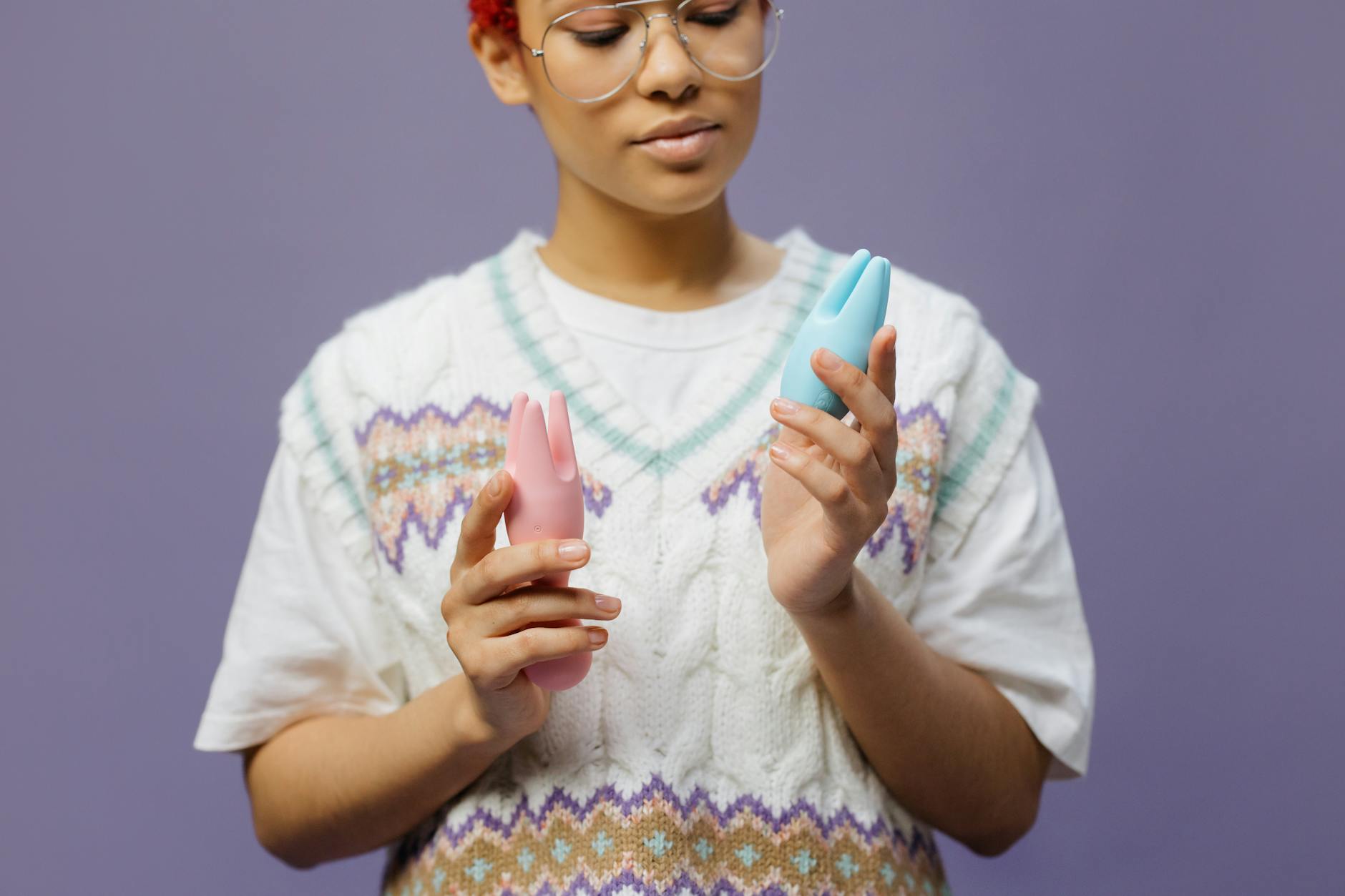
You've bought the lube. You've tried the lube. And it still feels like something's missing. That's not a failure on your part. Lubrication is a tool, and a good one, but it's not the only tool that matters when arousal feels distant or sensation feels muted. The real issue is usually something happening in your brain before anything happens in your body.
Here's what I see in my practice: people reach for more lube when what they actually need is a different approach to arousal itself. They're treating a symptom instead of addressing what's underneath.
Lube reduces friction. That's its job. But arousal is not friction. Arousal is a cascade of mental focus, blood flow, nerve activation, and psychological permission. You can have perfect lubrication and zero arousal. You can also have dry tissue and explosive arousal. These are separate systems.
When someone says lube isn't enough, what they usually mean is: "I'm not getting turned on the way I used to." That's a different problem. It might be stress, relationship dynamics, medication, hormonal shifts, or simply that your baseline arousal has changed with age or circumstance. Lube won't fix any of those.
The paradox is that lubrication can actually mask the real problem. If you keep adding more lube, you never address why arousal itself is stuck. You end up chasing a sensation that was never the actual issue.
This is the piece that changes everything: arousal lives in your attention. Your brain has to be focused on sensation for your body to respond. Most people with diminished arousal aren't physically broken. They're mentally divided.
You're thinking about work. Or your partner's breathing. Or whether you're taking too long. Or what's happening tomorrow. All of that noise is running in the background, and your nervous system is registering it as a threat. When your brain thinks there's danger, your body doesn't prioritize pleasure. It prioritizes safety.
Lemon vibrators work because they demand your attention in a way that lubrication alone cannot. The sensation is specific, localized, and intense enough to pull your focus away from the background noise. You can't think about your email when a lemon clitoral vibrator is engaging your nerve endings in a new way.
But here's the catch: you have to actually use them that way. Not as a quick fix. As a reset of your attention system.
Instead of thinking of lubrication and lemon vibrators as separate solutions, think of them as part of a sequence.
Start with your mind, not your body. Spend 5-10 minutes before you even touch yourself doing something that quiets the noise. That might be meditation, a walk, journaling, or simply sitting somewhere without your phone. The goal is to transition from task mode to sensation mode. Your nervous system needs permission to shift.
Then create physical safety. That means temperature (warm beats cold), privacy (actual privacy, not just closed doors), and time (knowing you won't be rushed). These aren't luxuries. They're the conditions your nervous system needs to activate arousal.
Now add sensation. This is where lube enters, but not as the main event. Use water-based lubrication as a facilitator, not a solution. Apply it and then start with lower-intensity stimulation. Hands first, or if you're using a lemon vibrator, start at pattern 1 or 2. Let yourself feel what's there before you escalate.
Then, and only then, introduce the lemon clitoral vibrator at the intensity that actually captures your attention. Not the highest setting. The one that makes you stop thinking about anything else.
One reason lemon vibrators work when lube doesn't is sensation specificity. Lubrication is diffuse. A lemon sucker or lemon vibrator creates a distinct, concentrated sensation that your nervous system recognizes as novel. Novelty activates arousal.
If you've been using the same technique for years, your body adapts to it. That's called habituation. Your nerve endings stop registering the stimulus as interesting. Adding more lube doesn't solve habituation. Changing the stimulus does.
This is also why varying patterns and intensities matters so much. If you always use the lemon vibrator the same way, habituation creeps back in. But if you explore different patterns (most lemon sexual toys have multiple settings), you keep your arousal system engaged. You're not chasing sensation. You're discovering it.
Here's something I hear constantly: "Lube works fine when I'm alone, but not with my partner." That's not a lube problem. That's a focus problem.
When you're with a partner, your attention splits between your own sensation and managing their experience, their comfort, their pleasure. That divided attention suppresses arousal. Even with perfect lubrication and a lemon clitoral vibrator, your brain isn't fully present.
The solution isn't more lube. It's communication. Tell your partner: "When I use this, I need you to give me 10 minutes of space to focus on what I'm feeling." That might mean they're in the room but not touching you. Or they're out of the room. The specifics matter less than the permission.
Many couples find that lemon sexual toys actually restore arousal because they give the person pleasure-focused permission to stop managing everyone else's experience. For the first time in years, they get to feel selfishly, fully present. That shift alone can resurrect arousal that lubrication never could.
One technique that transforms the lube-doesn't-work problem: deliberately slow down your entire rhythm.
If you've been using high-intensity stimulation (whether that's a lemon vibrator at max setting or very vigorous manual touch), your nervous system has upregulated. It's used to high input. Lower-level sensation stops registering. Your body needs more intensity to feel anything at all. That's the opposite of arousal. That's desensitization.
The reset: spend a week using only the lowest settings on your lemon vibrator. Or no vibrator at all. Just touch, with generous lubrication, at half the speed you normally would. Yes, this feels boring. That's the point. You're recalibrating your nervous system's baseline sensitivity.
After a week or two of this slower pacing, when you return to higher intensity, the sensation lands differently. Your body hasn't adapted to it yet. You regain sensitivity. And now, when you combine slower arousal building with focused attention and appropriate lubrication, the lemon vibrator becomes genuinely transformative again.
Sometimes lube isn't enough because your brain chemistry has shifted. SSRIs, hormonal birth control, testosterone decline, and thyroid changes all suppress arousal directly. No amount of lubrication rewires that.
If you've optimized arousal attention, pacing, partner dynamics, and novelty, and arousal still hasn't returned, that's the moment to talk to your doctor. Not because something is wrong with you, but because medication or hormonal intervention might genuinely help. That conversation is separate from the lubrication and vibrator conversation. Both matter.
The lemon vibrators that work best are the ones you use with intention, not desperation. That means building a sustainable routine that combines arousal prep (mental focus), appropriate lubrication (water-based, reapplied as needed), varied intensity and patterns (to prevent habituation), and protected attention (whether alone or with a partner who respects your focus).
Start with 10 minutes of mental settling before you touch anything. Apply lube mindfully, not as an afterthought. Begin with lower intensity on your lemon clitoral vibrator and let sensation build. If your mind wanders, that's not failure. That's information. You might need more time, less distraction, or a different approach to that particular session.
Your pleasure is worth this kind of attention. When lubrication alone has stopped working, it's not because you're broken. It's because you deserve an approach that actually fits what's happening now.
Yes, you can use lube with your lemon vibrator. Water-based lubricant is safe with silicone toys. Apply it to your body, not the toy itself (that makes it harder to control). Silicone is nonporous, so lube doesn't degrade it. Just rinse your toy after use and let it dry completely before storage.
Start with 3-4 times per week, 10-15 minutes per session, focused entirely on sensation. This gives your arousal system enough stimulus to start responding without creating habituation. Once sensation returns, you can adjust frequency based on what feels right for you. There's no universal schedule.
That's valid information. You might need to begin without the vibrator entirely, using only hands and lube for 1-2 weeks to rebuild baseline sensitivity. Or try shorter sessions (5 minutes instead of 15). The goal is to find the threshold where sensation feels interesting but not overwhelming, then gradually expand from there.
Completely normal. Your nervous system adapts to consistent stimulation. The solution is variety. Alternate patterns on your lemon vibrator, take breaks (even a week off can reset sensitivity), or introduce different toys. Novelty isn't betrayal of your favorite toy. It's how you keep arousal alive long-term.
Both work. Some people need solo time to rebuild focus without managing their partner's experience. Others rebuild arousal faster with a partner who listens and adjusts. The key is communication about what you need in each moment. That might shift from session to session, and that's completely okay.
Lube addresses friction. Vibrators address attention. Arousal lives in your brain's focus more than your body's lubrication. When lube alone hasn't worked, it usually means your arousal system is stuck on distraction or stress. A lemon clitoral vibrator creates specific, novel sensation that pulls your attention back into your body. That shift is what actually restores arousal.