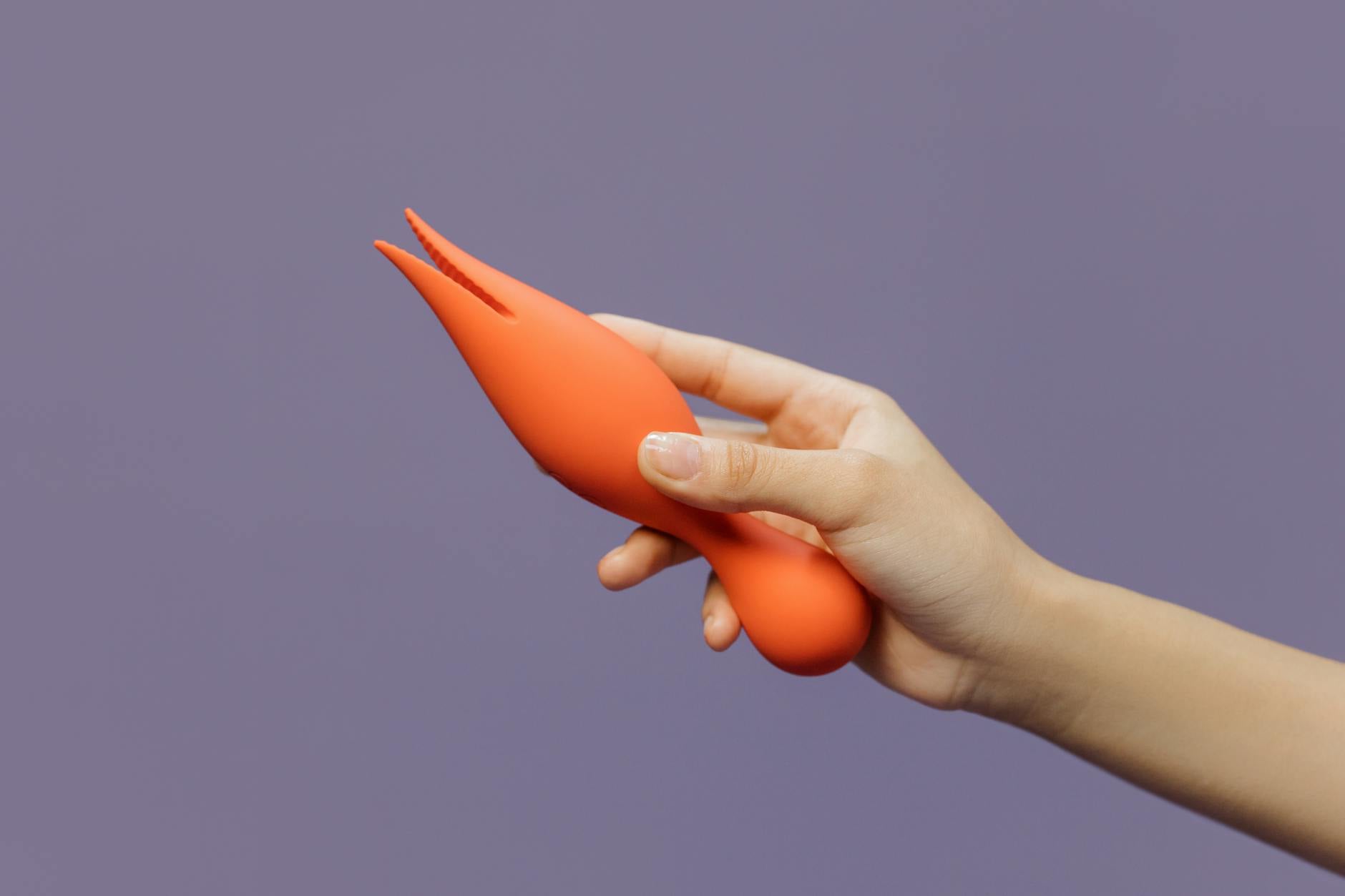
The thing nobody tells you: introducing a clitoral vibrator into sex with someone else is less about the toy and more about the conversation. Here's how to do both.
Most couples don't bring a lemon vibrator into their bedroom because of logistics. They don't because of what's happening in their head. One person worries it signals "you're not enough." The other worries they're being pushy. Nobody says anything. The vibrator stays in a drawer. Nothing changes.
Here's the truth: a vibrator is not a commentary on your partner. It's a tool that most vulva owners need to orgasm during partnered sex. That's not an insult to your partner's technique. That's anatomy.
The moment you introduce a lemon vibrator into partnered sex is actually a moment to deepen intimacy, not bypass it. I've worked with hundreds of couples, and the ones who handle this well have one thing in common: they talk about it beforehand, separately from the bedroom.
Not during sex. Not in the moment. Before. When you're both calm, clothed, and nobody's in a vulnerable state.
The conversation needs three parts. First, you clarify why you want this. "I want to experience more pleasure with you" lands differently than "I can't come without this." Second, you ask what your partner is feeling. Fear of replacement? Inadequacy? Excitement? They need room to be honest. Third, you make it explicitly collaborative: "Let's figure out how this works for both of us together."
Okay, so you want to introduce a lemon clitoral vibrator. You're the one who brought it up. Here's what works.
Pick a neutral moment. Not before sex, not after. A quiet evening, a car ride, whenever you both can actually think. Say something like: "I've been thinking about trying a vibrator during sex with you, and I want to talk about it because I value your thoughts."
Then actually wait for their response. Don't fill the silence. Let them sit with it for a second.
If they ask why, be specific and honest. "My body responds really well to this kind of stimulation" is clearer than "I just think it would be fun." Clarity reduces anxiety in your partner. Vagueness fuels imagination, and their imagination might be running wild.
If they resist, ask what's underneath. Often it's not about the toy. It's about something else. Fear of not being enough. Worry about performance. Something from their past. That's the conversation to have, not a debate about whether vibrators are "cheating."
Take it seriously, even if your first feeling is defensive. What they're saying is: "I want to feel more pleasure. And I want to do it with you." That's actually a vote of confidence.
Your job here is to listen without fixing. You don't need to buy the vibrator tomorrow or prove you're cool with it. You can say, "This is new for me. Tell me more about what you're imagining." Then listen. Ask questions. Make space for the conversation to actually happen.
If you're anxious, name it. "I'm excited about this and also a little nervous" is way better than smiling while you're actually stressed. Partners can feel that energy. It undermines the whole point.
Once you've talked, the mechanics are simpler than you think.
A lemon vibrator or lem vibrator works on suction and gentle vibration patterns. It's designed to be used solo or partnered. The most common setup for couples is you inside or stimulating externally with your hands or with a partner toy, while the lem stays focused on clitoral stimulation.
Positioning depends on what you're already doing. If you're in a position where you can both easily access the clitoris, that's your sweet spot. Many couples find that side-by-side or facing each other with the person receiving the vibration slightly reclined works well. You have visibility, the vibrator can rest comfortably, and both partners can stay connected.
If you're already using another toy or fingers internally, the vibrator fits into that without competing. Start at a low setting. The goal isn't intensity. It's integration.
Here's where a lot of couples miss the mark. They bring in the vibrator and treat it like the whole event. "Okay, now we use the toy." But good partnered sex with a clitoral vibrator is about weaving it in naturally.
Start it before penetration or main action begins. Let the person receiving it have a minute to focus on just that sensation and the building arousal. Then when penetration or other stimulation starts, the vibrator becomes one layer in the overall experience. The rhythm you build together matters more than any single sensation.
Comm during this is key. "Does this feel good?" "Want me to change anything?" "What do you need right now?" These questions are hot. They're also functional. They keep you synchronized instead of just assuming.
Speed and pressure can change based on what feels right. If your partner usually needs sustained, moderate pressure to reach orgasm, the vibrator should support that, not fight it. If they need building intensity, you might start low and gradually increase.
Here's what I tell couples: using a lemon vibrator doesn't guarantee an orgasm. It doesn't fix communication problems. It doesn't solve mismatched desire or resentment. It's a tool that works best when the foundation is already solid.
Some people will orgasm faster with it. Some won't notice a huge difference. Some will prefer it solo. All of those are fine. The goal isn't the vibrator. The goal is mutual pleasure and connection.
The first time you use it together might feel weird. That's normal. You're coordinating something new. Your brain is partly on logistics and partly on sensation. By the second or third time, it usually integrates more smoothly.
During sex, if your partner seems uncomfortable or disengaged, pause. Not forever. Just pause. "Everything okay?" is a complete sentence. Maybe the vibrator pressure is too intense. Maybe they got in their head. Maybe their body just wasn't ready. None of that is failure.
After sex, check in again. "That was interesting" is very different from "I loved that." Make space for honest feedback. If they didn't love it, that doesn't mean you never try again. It might mean you adjust the approach, the timing, the positioning, or the toy itself.
Some couples find that a different style works better. The lem is a clitoral suction vibrator. Some people prefer a wand. Some prefer a bullet that's simpler and less intense. You're not locked in.
Introducing a toy into partnered sex isn't really about the toy. It's about your relationship's capacity to evolve, ask for what you want, and trust each other with vulnerable asks. That's the real work.
If your partner is willing to learn how to use a lemon vibrator with you, they're saying: "Your pleasure matters to me." If you're willing to bring it into your intimate space, you're saying: "I trust you with this part of me."
That's the foundation that makes the vibrator work. Everything else is just technique.
No. Most people with vulvas need clitoral stimulation to orgasm during partnered sex, and most partners can't provide exactly what they need through penetration alone. Adding a vibrator is an adjustment, not an indictment. Plenty of couples with thriving sex lives use toys. It's actually a sign you're both invested in pleasure.
That's a common worry, and it's worth talking about before you start. But here's the reality: a vibrator doesn't replace your partner. It adds to the experience. If your partner is engaged, present, and connected to you during it, they're very much needed. The vibrator is one sensation. Your partner is the whole experience.
Frame it around what you want, not what's missing. "I want to explore reaching orgasm in a new way with you" is different than "You're not making me come." The first opens a conversation. The second closes one. Also, pick the right moment and be direct but kind. Most partners respond better to honesty than to hints.
That's their boundary, and it's worth respecting. But it's also worth understanding why. Is it insecurity? Unfamiliarity? A different approach to pleasure? Sometimes the boundary shifts when the conversation gets deeper. Sometimes it doesn't. Either way, you can use a vibrator solo and have a partner who supports that, which is actually fine.
Not really. Any position where both of you can access the clitoris works. Side-by-side, face-to-face with one person partially reclined, spooning with the receiving partner slightly forward. The best position is the one that keeps both of you comfortable and connected.
Ask. "Does this speed work for you?" "Want it stronger or lighter?" is always the answer. Different people respond to different patterns. Some need steady rhythm. Some need variation. The person using the vibrator should be able to feel what's building for the person receiving it, and they can adjust based on responsiveness. It's a conversation with your body and theirs.