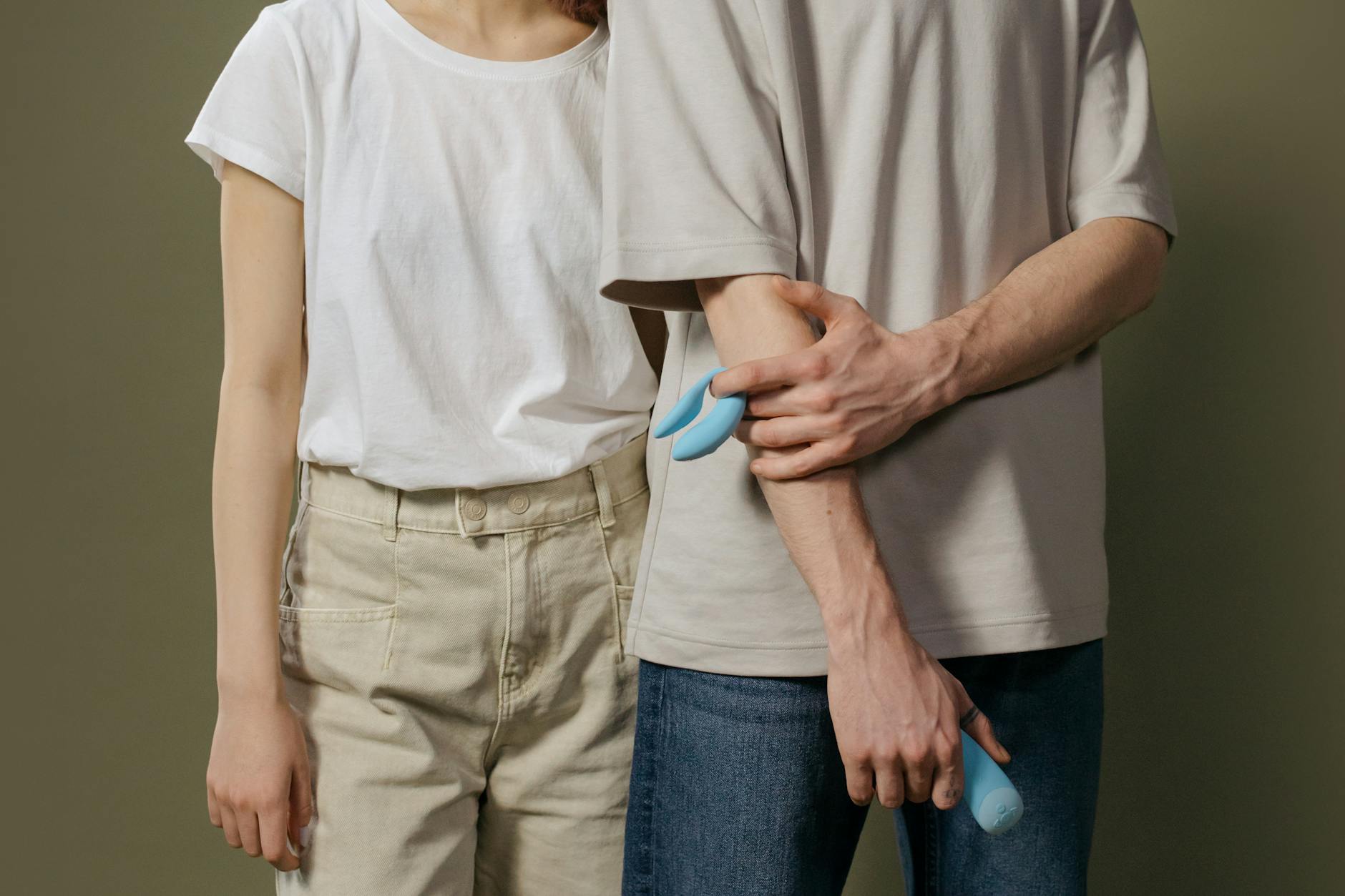
Here's the thing. You've been thinking about this for weeks. Maybe you saw lemon vibrators online, or a friend mentioned them, or you just know something's missing. And now you're stuck in your own head, imagining every possible way your partner could react. The silence feels safer. But silence also means you don't get what you actually want.
We grow up absorbing the message that wanting things sexually is somehow selfish or needy. Then we spend our adult years trying to undo that belief while simultaneously worrying that our partner will think we're dissatisfied. Those two things live in the same anxiety loop.
Here's what I see in my practice over and over. When someone brings up toys with their partner, they expect judgment. They get curiosity instead. Your partner is probably not thinking "my partner must not find me attractive" when you suggest a lemon clitoral vibrator. They're thinking "oh, so there's something they've been wanting to explore. I didn't know." Those are completely different conversations.
The anxiety spike is real. The actual rejection rate is not.
Don't bring this up during sex. Don't bring it up when you're angry. Don't bring it up at a dinner party or when your partner is already stressed about work. This deserves space.
The best moment is when you're both relaxed, fed, and away from screens. I genuinely mean that. A 15-minute car ride works. Sitting on the couch with coffee works. A quiet moment before bed where neither of you is about to fall asleep. You're looking for a window where attention is available, stakes feel low, and there's time to actually talk.
Timing also means picking a moment when your partner isn't already anxious about their performance. So not "this isn't working for me," not after a difficult week. Just. Normal Tuesday. Relaxed Tuesday.
The magic is in moving from "I want this" to "I want this with you." Here's a template that actually lands:
"I've been thinking about trying something new sexually, and I want to explore it with you. I saw this lemon clitoral vibrator, and I think it could feel really good. But I wanted to talk to you about it first, because I want this to be something we do together, not something that surprises you."
That's it. Notice what's in there.
You're being honest about your own interest. You're naming the specific thing (not vague "something"). You're emphasizing togetherness. And you're giving your partner agency in the moment by asking them to think about it, not demanding a response right now.
If your partner hesitates, don't immediately jump to defending your position. Instead, ask: "What are you thinking?" Let them name what's actually on their mind. Sometimes it's "I didn't know you wanted that." Sometimes it's "I'm not sure how that would work." Sometimes it's "that intimidates me a bit." All of those are solvable.
First, don't panic. Discomfort isn't rejection. I've had countless couples where one partner was initially hesitant, asked questions, and then was the one pushing to actually use lemon vibrators together within a week.
If they're uncomfortable, stay curious. "Tell me what makes you hesitant." Is it body image stuff? Is it worry that you'll prefer the toy to them? Is it just unfamiliar and they need time to adjust?
Most hesitation falls into one of three buckets. One. Insecurity about performance or attractiveness. Two. Worry that toys "mean something" about the relationship. Three. Genuine discomfort about their own sexuality that has nothing to do with you.
You address each one differently. If it's insecurity, you get to say directly: "I want this because I want to explore with you, not because anything is wrong." If it's meaning anxiety, you get to say: "This is about expanding what we do together, not replacing anything." If it's their own stuff, you get to say: "I respect that. We can take time." And then you actually do.
Here's what typically shifts things. Your partner starts asking questions. "Like how does it work?" or "where would we use it?" These aren't rejections. These are entry points. You've moved from "no" to "I don't understand."
That's when you can show them a website, maybe even watch a quick demo video together. Let them get used to the idea by making it real and ordinary instead of mysterious. A lemon clitoral vibrator isn't a big deal. It's a tool for pleasure. The more normal you make it, the faster their nervous system settles.
Some partners need to hold it. Let them. Some partners need to know it's waterproof and easy to clean. Tell them. You're removing mystery, which is usually what's driving resistance.
If your partner agrees to try, don't make the first time a big production. You're not recreating a scene from a movie. You're experimenting.
Start the way you normally would. When things are feeling good and you're both relaxed, introduce it slowly. Let your partner see you use it first, or use it on them gently. Some couples find that the person with the vulva holds it themselves at first. Others have their partner use it. There's no right way.
The communication matters here too. "Does the pressure feel okay?" or "Tell me if you want me to adjust." You're checking in, which tells your partner you care about how this feels, not just that you wanted to try it.
Couples who can talk about sex tend to have better sex. They also tend to have better communication about money, conflict, and vulnerability in general. Asking your partner for what you want sexually is practice for asking them for what you want in every other area of your relationship.
When your partner says "okay, let's try that," what they're really saying is "I trust you enough to be vulnerable with you." That's the foundation. The lemon vibrator is just the vehicle.
This is the most common anxiety, and it's worth addressing directly if it comes up. You can say: "I want to be clear. This is about expanding pleasure, not because anything is wrong with what we already do." Most people understand toys as addition, not replacement, once you say it out loud.
After. Definitely after. Surprising your partner with a vibrator can feel good in theory, but it removes their agency. Let them be part of the choice. It signals respect and gives them ownership over the experience.
Talk about that too. "I want to try this, but I'm also nervous." Your partner can help ease you in. That's actually a good moment for them to feel needed and collaborative.
A lemon clitoral vibrator like the Nancy Lemon Toy is designed for external stimulation and works well for both solo and partnered play. Start with something straightforward. You can always explore other options later.
There's no schedule. Use it when it feels good. Some couples use toys every time. Some use them occasionally. This isn't about replacement, it's about options.
That's fine. Put it away, no big deal. You tried something, it wasn't your thing, you move on. But you also moved the needle on communication, which is the real win.
Once you've opened this door, there's usually a natural follow-up. Maybe your partner wants to try something else. Maybe they want to talk about what they've been thinking about. Maybe they just want to do it again. The point is you've created a space where sexuality can be discussed, which is honestly rarer than you'd think.
You get to keep asking each other what feels good. You get to keep being curious. That's what this conversation actually opens up.