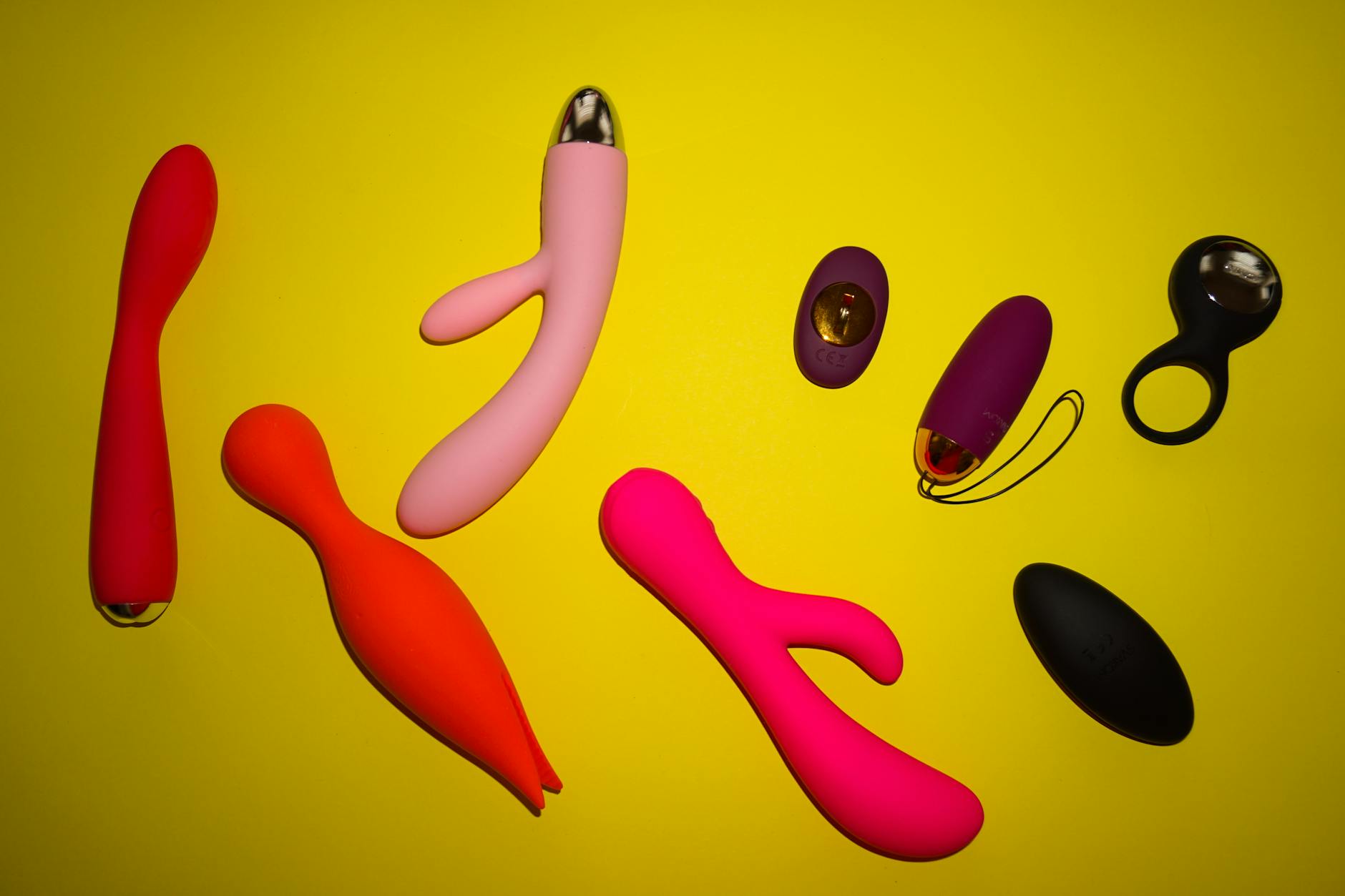
Let's be real: you got the IUD for contraception. Nobody warns you that it might also change how your clitoris responds to touch. But it does. The hormonal shift is smaller and more localized than birth control pills, yet for many people with vulvas, it's surprisingly noticeable.
The good news is that this isn't a permanent loss of sensation. It's a recalibration. And lemon vibrators, particularly air-suction designs like the Lem, adapt to that recalibration better than many other toys because they work with your body's new electrical wiring instead of against it.
Your IUD releases a synthetic progestin directly into your uterus and bloodstream. The dose is lower than oral birth control, but it's still there, and it reaches your clitoris. Here's what shifts:
Estrogen sensitivity in the clitoral tissue decreases slightly. This means the nerves respond more slowly to light touch. Testosterone levels also drop a bit, which reduces overall spontaneous arousal and the intensity of baseline sensitivity. Blood flow to the genitals changes, which affects how quickly engorgement happens during arousal.
But here's what doesn't change: the nerve density itself. Your clitoris still has 8,000 nerve endings. They're just responding to a different hormonal environment. Think of it like turning down the volume on a stereo. The speakers still work. The music's still there. It's just quieter at baseline.
Most people adjust within 3-6 months. Some never notice. Others find the shift persists for as long as they have the IUD. If you're in that third group, lemon vibrators become less of a luxury and more of a practical recalibration tool.
Immediately after IUD insertion, inflammation and hormonal adjustment peak. Your clitoris is swollen from the procedure, your uterus is cramping, and your nervous system is in mild shock. Pleasure is the last thing on your radar, and that's fine.
But two weeks in, when the cramping stops and you think you're ready to explore again, many people report that touch that used to feel electric now feels muted. It's not broken. It's not permanent. It's your body settling into a new baseline.
The first instinct is often to use something stronger. Faster vibrations, more intense pressure. But that usually backfires because you're exhausting already-dampened nerve endings instead of awakening them. This is where lemon suction toys shift the game. Suction works on pressure and pulse, not grinding vibration. It's a different sensation pathway entirely, which means it bypasses the desensitization you might be experiencing with other toys.
Lemon sexual toys operate through gentle air-pulse technology, mimicking oral suction. This creates a sensation that doesn't rely on the same nerve pathways as direct vibration. Here's why that matters:
Direct vibration stimulates fast-twitch nerve fibers. When your baseline sensitivity drops from hormonal changes, those nerves tire quickly. You need more intensity to feel anything, which leads to a cycle of escalation.
Suction and pulsing, by contrast, engage a broader range of sensory receptors. They create pressure changes rather than just oscillation. For someone whose sensitivity has shifted because of an IUD, this often feels more interesting at lower intensities because it's literally a different sensation pattern.
Many of my clients report that lemon vibrators feel surprisingly effective right after an IUD insertion precisely because the novelty of the suction sensation registers clearly even when baseline clitoral sensitivity has dropped. You're not fighting your body's new wiring. You're working with it.
One of the most common complaints I hear is: "It takes forever now." With a hormonal IUD, arousal ramps slower. What used to build in five minutes might take fifteen. This isn't a sign of low desire. It's a sign that your body needs more time to reach the same destination.
Here's the adjustment: start lemon vibrator sessions earlier and expect a longer warm-up. Begin at lower intensity patterns (1-3 on the Lem) and give your body 10-15 minutes to respond before increasing intensity. This isn't about struggling harder. It's about giving your nervous system time to recognize the signal.
Many people also find that combining lemon vibrators with mental focus works better post-IUD than it did before. When arousal doesn't come automatically from physical sensation alone, directing your attention (fantasy, memory, sensory focus) becomes more important. The toy is the physical translator, but your brain is doing more of the actual work.
Here's the thing though: not all sensation loss after an IUD is hormonal. Some of it is fear. IUD insertion is traumatic at the nervous-system level, even if it's over in three minutes. Many people develop a subtle protective tension around the pelvis afterward. The muscles tighten, the nervous system stays on alert, and pleasure becomes harder to access.
If you notice that sensation is unchanged physically but pleasure still feels blocked, that's usually protective tension, not hormonal dampening. A lemon vibrator can help here too, but in a different way. The rhythmic pulsing can help reset a tense pelvic floor. Some people find that using the Lem at low intensity while focusing on relaxing the pelvic floor (not tightening it) actually rewires the nervous system's protective response faster than anything else.
Don't use any vibrator for at least two weeks post-insertion. Your cervix is inflamed and your uterus is irritable. Let it settle.
At three weeks, you can start, but go low and slow. Intensity setting 1, five to ten minutes maximum, a few times a week. You're not trying to have an orgasm. You're just reintroducing your body to pleasure sensation in its new hormonal state.
By week six (the typical IUD checkpoint with your provider), most people can use lemon vibrators fully. But even then, you might notice they feel different than they did before. That's not a sign to push harder. It's a signal to recalibrate expectations and settle into your new normal.
Hormonal IUDs can also reduce natural lubrication slightly. This isn't true vaginal dryness (that's a different condition), but it's noticeable enough that some people need a little help.
Use a water-based lubricant when you're working with lemon vibrators post-IUD. Not because anything is broken, but because it removes friction variables from the equation. You want to know whether sensation changes are neural or mechanical. Lube clarifies that distinction.
Silicone-based lubes feel richer, but they can degrade silicone toys over time, so stick with water-based if you're using the Lem or other silicone-body clitoral vibrators.
If you have a partner, the sensation shift affects both of you. Your partner might assume the dampened response means you're not interested anymore, when really you're just operating on a different timeline and intensity curve.
The conversation to have isn't "my body is broken." It's "my body is adjusting to the IUD and I'm learning a new rhythm. Here's what's working now." Sometimes that means more foreplay before introducing any toy. Sometimes it means introducing lemon vibrators to partnered sex when you might not have before, because they bridge the gap between manual stimulation and the intensity you need.
Most sensation changes from an IUD settle within six months. If you're a year in and pleasure still feels significantly muted, it's worth asking whether the IUD is the right choice for you, or whether something else is also happening (stress, relationship tension, other health factors).
If you experience pain during or after using lemon vibrators that didn't exist before insertion, tell your gynecologist. IUD displacement is rare, but it happens, and pain is a sign to rule it out.
Otherwise, expect the first six months to be an experiment. Your body is learning its new baseline. Lemon vibrators are just tools that help that learning happen faster and more pleasantly.
Yes, but wait at least three weeks after insertion, start at the lowest intensity, and keep sessions short (under ten minutes). Your body needs to settle before you reintroduce strong sensations.
No. Overuse might temporarily fatigue your nerves, but that's true of any toy. Used thoughtfully at lower intensities, lemon clitoral vibrators actually help your body recognize pleasure signals in a new hormonal context.
Not universally. But the suction-based approach often works better than traditional vibration for people whose baseline sensitivity has dropped, because it's a fundamentally different sensation pathway. Worth trying if other toys feel frustrating.
Typically 3-6 months for most hormonal changes to settle. Some people notice shifts throughout the first year. If nothing has normalized by month six, talk to your provider about whether the IUD is still the right fit for you.
Your old toys will still work once your body stabilizes. Some people find they prefer lemon sexual toys even after adjustment because the suction sensation just works better for them. Others rotate between toy types depending on mood and arousal level.
That's normal for some people. Your body isn't broken. It's just operating at a different baseline now. Adjusting expectations and exploring what new pleasures emerge (often with lower-intensity, longer-duration sessions) usually feels better than chasing the past sensation.
Having a hormonal IUD means your body is doing something it didn't before: releasing synthetic hormones into your bloodstream continuously. That changes things. Sensation, arousal timing, lubrication, orgasm intensity. Some of these changes settle. Some stick around.
Lemon vibrators, and particularly lemon suction toys, work well in this new landscape because they don't demand that your body perform the way it did before. They work with what you have now. Your pleasure still matters. It's just operating on a different schedule and with different triggers.
If you're struggling with sensation changes post-IUD, know that what you're experiencing is common, temporary for most people, and absolutely workable. Start low, be patient with your body's adjustment, and remember that pleasure is still available to you. It just might look a little different than it did before the IUD went in. That's not a loss. It's just recalibration.