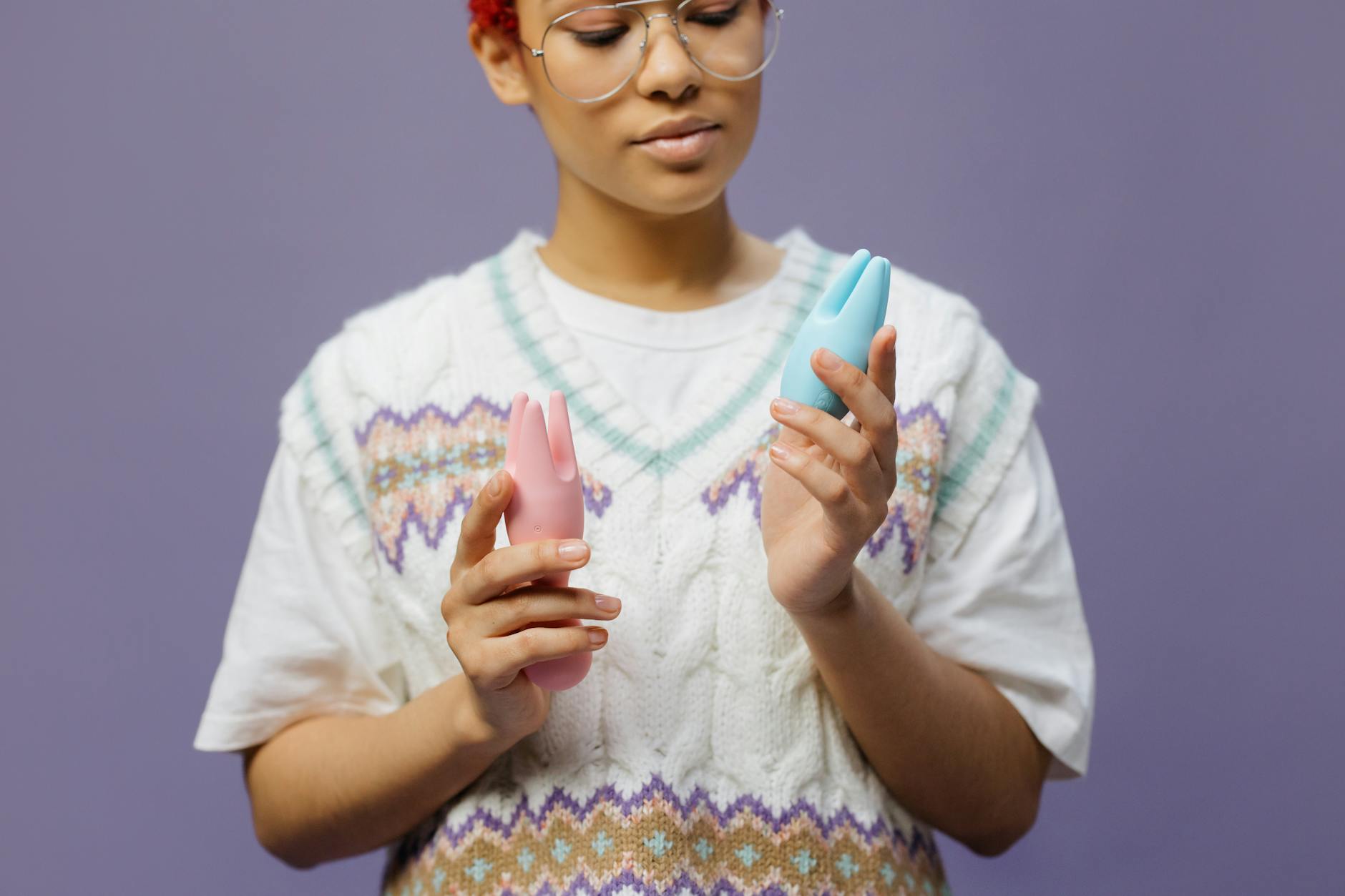
How Lemon Vibrators Help When SSRIs Change Your Sensitivity
Antidepressants save your life and flatten your pleasure. Here's exactly why, and how clitoral vibrators can rebuild sensation when medication dulls your body's response.
You started antidepressants. They worked. Your anxiety dropped, your panic quieted, you could breathe again. And then you noticed something else had gone quiet too. Orgasms take forever. Sensation feels muted. Your body doesn't respond the way it used to.
This isn't your imagination, and you're not broken. Selective serotonin reuptake inhibitors (SSRIs) are some of the most effective medications in psychiatry. They're also notorious for sexual side effects that almost nobody warns you about in the first appointment.
Here's what's happening in your brain. SSRIs work by increasing serotonin availability in your synapses. That's brilliant for mood regulation, but serotonin also modulates dopamine and norepinephrine, the neurotransmitters that drive sexual arousal, lubrication, and orgasm.
When you increase serotonin, you're slightly dampening the cascade that leads to sexual response. It's not a bug in the medication. It's how the system works. Different SSRIs have different profiles. Some (like sertraline) are worse for sexual function than others (like bupropion, which is technically not an SSRI at all). But nearly all of them affect pleasure to some degree.
The result is typically one or more of these: delayed orgasm, reduced intensity, lower desire, difficulty with arousal, or that numb sensation where your body is responding but it doesn't feel like much.
Your doctor might have said "Switch to a different SSRI" or "Take a drug holiday" (stopping the medication for a day before sex, which works short-term but is risky long-term and not recommended by most psychiatrists). Some will suggest adding another medication to counteract the side effect.
All of those are valid conversations to have with your prescriber. But none of them address what's true right now: you're on a medication that's helping your mental health, and you want to reclaim pleasure anyway.
That's where clitoral vibrators come in. Tools like the Lem aren't a workaround or a consolation prize. They're a genuine solution.
Clitoral vibrators, especially suction-based ones like the Lem, work differently than your hand or a partner. They deliver consistent, targeted stimulation at frequencies and intensities your body can perceive even when medication is dampening sensation.
Think of it this way: medication has turned down the volume on your nervous system's pleasure signals. A vibrator doesn't turn up the volume of a quiet signal. It delivers a stronger signal directly to the clitoral nerve endings, one that can cut through the dulling effect.
Suction vibrators are particularly useful here because they create a seal and gentle pulse rather than friction. That pattern activates different neural pathways than direct stimulation does. Many people on SSRIs report that suction devices feel like the first time they've had reliable sensation and orgasm since starting medication.
If you're experiencing sexual side effects from an SSRI, start here.
Use a vibrator specifically designed for the clitoris. A standard vibrator is fine, but clitoral vibrators like Nancy Lemon Toy's lemon vibrators are engineered for the task. The Lem, for example, is built for consistent stimulation that can reach through medication numbness.
Expect longer warm-up time. Your arousal system is slower now. Budget 20-30 minutes instead of 10. Use the time to get present in your body without judgment. Pressure to orgasm will make this harder.
Start on lower settings and work up slowly. Your sensitivity is reduced, but you're not numb everywhere. Lower settings will help you find the stimulation you can feel, then gradually increase intensity as you warm up.
Separate desire from pleasure. Many people on SSRIs report that their actual want to have sex is lower too. That's real. But pleasure and desire aren't the same. You might not feel the craving, but your body can still experience really satisfying sensation and orgasm once you're engaged. Give it time to happen.
Use lubrication. SSRIs can slightly reduce natural lubrication too. A water-based lube removes that friction variable and lets the vibrator work more effectively.
Honestly, bring this up. A good prescriber wants to know that medication side effects are affecting your quality of life, and sexual function absolutely counts. Here's what I recommend saying:
"I've noticed that the medication has affected my sexual response. I'm grateful for what it's doing for my mental health, and I want to find ways to work with this rather than against it. Have we talked about all the options?"
Options might include:
Timing adjustments. Some SSRIs build up and clear your system at predictable rates. Your doctor might suggest taking the medication at a different time of day or exploring whether a lower dose maintains your mental health benefit while reducing sexual side effects.
Adding bupropion. This medication boosts dopamine and can counteract SSRI sexual side effects for some people. It's not right for everyone (it can increase anxiety in some folks), but it's worth discussing.
Switching to a different SSRI. Your prescriber might suggest trying a different one in the same class that has a lower sexual side effect profile for you personally. This takes time and isn't always an option, but it's worth asking.
Staying on what's working and using tools like vibrators. This is completely legitimate. You don't have to choose between mental health and sexual pleasure.
Here's something important: using a clitoral vibrator won't restore your sensitivity to exactly what it was before SSRIs. Your nervous system has changed. But it can absolutely rebuild pleasure to a place where sex feels good, orgasms are reliable, and your body feels alive again.
Many people find that the combination of a vibrator and acceptance that sensation is different leads to better sex than they had before. You're not trying to get back to the original. You're building something new.
For partners, the key shift is understanding that this isn't about dissatisfaction with them. It's medication. It's not personal. Using a vibrator together can be a relief for both people, actually. Your partner isn't responsible for creating an orgasm that medication is interfering with. The vibrator does that work. That takes pressure off everyone.
If you're experiencing complete loss of libido, persistent anorgasmia despite trying these strategies, or if the sexual side effects are serious enough that you're considering stopping medication on your own, talk to your psychiatrist or GP right away. Don't stop SSRIs without medical guidance. Withdrawal is real, and medication is keeping you stable for a reason.
There are solutions. You might need to switch medications, add something, adjust timing, or use a combination of strategies. The point is that sexual side effects aren't something you just have to accept and suffer through. They're a valid medical conversation.