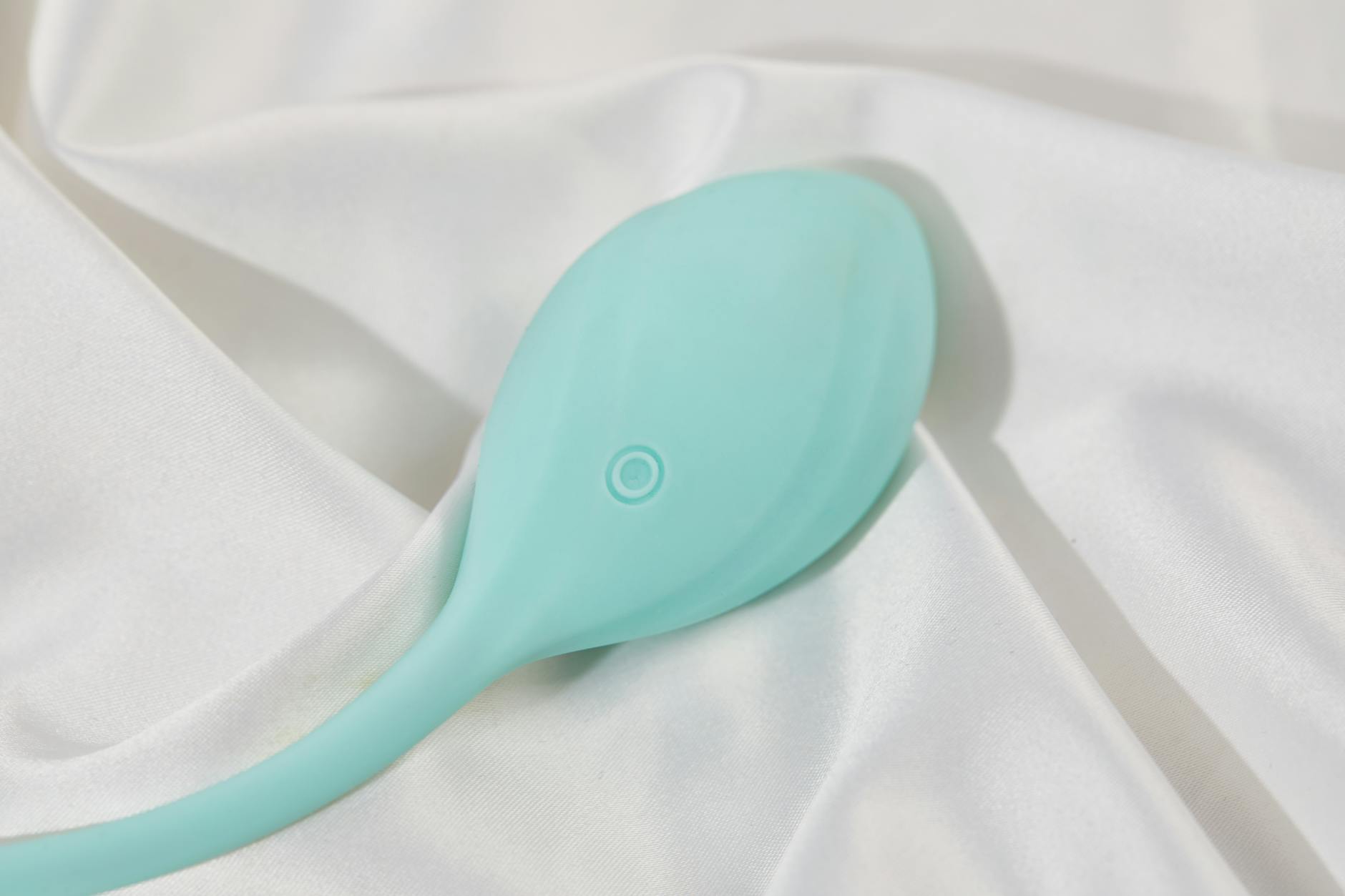
Does a Lemon Vibrator Affect Birth Control or Hormones?
The straight answer: no. But here's what actually matters when you're using clitoral vibrators while on hormonal contraception, and why the myth persists.
Your birth control doesn't care what you do with your body for pleasure. A lemon vibrator won't interfere with the pill, the patch, an IUD, the implant, or any other form of hormonal contraception. Full stop. There's no mechanism by which a clitoral vibrator could alter how your contraception works.
So if that's your main worry, you can stop reading and go enjoy yourself. But I'm guessing you landed here because you've heard conflicting information, or you're cycling through worst-case scenarios in your head at 2 a.m. Let me walk you through why this myth exists, what actually does affect birth control, and what you genuinely need to think about when combining pleasure tools with contraception.
The confusion usually comes from mixing up two separate things: your birth control effectiveness and your body's response to stimulation. Those are completely different conversations.
Some people notice that when they use a lemon vibrator or any clitoral toy while on hormonal contraception, their body feels different. Maybe their arousal seems easier, or they feel a different kind of sensation, or their cycle feels slightly irregular. Then they connect those dots to the toy itself, when actually what's happening is usually something much simpler.
Hormonal birth control already affects your body. It changes your baseline arousal, your vaginal lubrication, your cycle (or stops it entirely), and sometimes your mood. When you add stimulation on top of that, it's easy to assume the toy is the culprit when really you're just experiencing how your medicated body responds to pleasure. That's not a problem. That's information.
The second place this myth lives is in general sex-ed anxiety. There's this half-remembered feeling that "vibrations might mess with my IUD" or "anything inside my body might affect my hormones." Both are technically understandable worries if you don't know the mechanics. Neither is actually true.
Hormonal contraception works through your bloodstream and your brain. The pill releases hormones that suppress ovulation. The implant, patch, and ring do the same thing. An IUD (whether copper or hormonal) either prevents sperm from fertilizing an egg or, in the case of hormonal IUDs, thickens cervical mucus and sometimes stops ovulation. None of these mechanisms are disrupted by external vibration, friction, or any pleasure activity.
A vibrator is a surface-level tool. It stimulates nerve endings in your vulva and clitoris. It doesn't penetrate your bloodstream, it doesn't interfere with your hormonal system, and it has zero contact with the mechanisms that make your birth control work.
Here's what actually can affect your birth control: antibiotics (certain ones, not all), St. John's Wort, some anti-seizure medications, and missing doses. If you're on the pill and you vomit within a couple hours of taking it, that can reduce effectiveness. Extreme diarrhea can too. A lemon vibrator cannot.
This is the useful part. Hormonal birth control does shift your sexual response, and knowing how helps you use pleasure tools more effectively.
Many people on hormonal contraception report changes to their arousal. Some feel more relaxed (fewer pregnancy worries, fewer hormonal swings). Others feel less spontaneous desire. Some experience vaginal dryness or changes to lubrication. Your cervix position might feel different. Your orgasm intensity might shift. Some people report deeper, more full-body orgasms on the pill. Others find clitoral stimulation more sensitive or less sensitive depending on the specific formulation.
There's no universal experience here. Your body is individual. But what matters for using a lemon vibrator or any clitoral toy is knowing your own baseline and noticing if something genuinely changes.
If you've been using the same vibrator for months and suddenly it feels too intense, that's not the vibrator or the birth control conspiring against you. Your sensitivity genuinely might have shifted. That's when you reach for a lower intensity setting, add more lube, or take a break and come back to it. Same tool, adjusted technique.
Let me address the IUD worry directly because it comes up constantly.
Your IUD is sitting in your uterus. Your vibrator stimulates your external genitalia and clitoris. The distance and barriers between them make interference impossible. You cannot dislodge an IUD with a vibrator. You cannot "make it move" with vibrations. An IUD is held in place by your uterine shape, not by muscle tension, so even if you had the most intense full-body orgasm of your life, your IUD is staying put.
That said, if you have an IUD, there are a few practical things worth knowing. Some people with IUDs report that internal stimulation (penetration) feels different than before the IUD was placed. Some feel slight discomfort during certain positions or types of penetration. If you're using an internal vibrator alongside your IUD, pay attention to how it feels. Pain is information. A dull ache or slight pressure sometimes happens as your body adjusts. Actual sharp pain usually means slow down and check in with your gynaecologist.
External vibrators like a quality lemon clitoral vibrator won't touch your IUD. No problem at all.
Combining birth control and pleasure tools almost never requires medical attention. But there are moments when it's worth a quick check-in with your GP or gynecologist.
If you've been on hormonal contraception for months and suddenly your arousal has completely tanked, that's worth mentioning. It could be the pill, it could be relationship stress, it could be depression, it could be something else entirely. A professional can help you sort signal from noise.
If you have an IUD and you're experiencing cramping or discomfort during or after using internal vibrators, mention it. Most of the time it's fine. Sometimes a simple technique adjustment helps.
If you're considering switching birth control methods and you're worried about how it might affect pleasure, that's a valid conversation to have. Some formulations shift sexual response more than others. Your doctor might have useful input on which options tend to preserve arousal better.
But "I use a lemon vibrator, am I breaking my birth control?" No. You're not. You're fine.
Honestly, combining contraception and pleasure is straightforward. The real questions aren't medical. They're practical.
Use lube if you want to. Your birth control doesn't care. Water-based lube is safest if you're using silicone toys like the Lem. Change the batteries or charge your toy regularly so it doesn't die mid-session. Clean your lemon vibrator before and after use, especially if you're sharing it with a partner. Keep track of your contraception the way you normally do. Enjoy yourself.
If you're on the pill, take it at the same time every day. If you have an implant or IUD, go to your check-ups. If you use condoms, use them correctly. None of that changes because you own a pleasure tool.
The only real integration between birth control and vibrators is peace of mind. When you know that your contraception actually works and your vibrator has zero bearing on it, you can relax. You can focus on the pleasure part instead of spinning through worry. That's the whole point.
No. Your IUD is anchored in your uterus. External vibration from a toy has no way to reach it, and even if it somehow could, vibrations can't dislodge it. If you have an IUD and you use an internal vibrator, pay attention to comfort levels. If something hurts, that's your signal to stop or adjust. But a vibrator itself won't harm your device.
Sometimes. Hormonal contraception can shift arousal patterns and sensitivity. Some people report that clitoral vibrators feel more intense on the pill. Others feel less responsive. This is normal variation, not a sign something is wrong. If a lemon vibrator suddenly feels too strong or too weak, experiment with different intensity settings or additional lubrication.
No. Pills work through your bloodstream and brain chemistry. A vibrator stimulates nerve endings on your vulva. There's no connection between the two. Your birth control effectiveness stays the same whether you use a pleasure tool or not.
Absolutely. The patch delivers hormones transdermally. A vibrator doesn't interfere with that delivery system. Use the patch exactly as prescribed, and use your vibrator however you like. They coexist with zero conflict.
Mild cramping sometimes happens if you've had an intense orgasm or if you've used a vigorous toy for a long time. That's usually just your uterus contracting in response to stimulation. It typically passes within a few minutes. If cramping is severe or lasts for hours, or if you're generally experiencing pain during sex, mention it to your doctor. That might be something worth investigating, but it's not related to the vibrator interfering with your birth control.
Not really. External vibrators like lemon clitoral suckers work safely with every contraceptive method. Internal vibrators are fine with pills, patches, implants, and hormonal IUDs. With copper IUDs, some people report slight discomfort during internal vibration, so check your comfort level. Nothing is "incompatible." Your contraception will continue working exactly as designed.
Your birth control and your pleasure tools live in completely separate systems. One manages your reproductive health through your endocrine system. The other brings nerve endings to life on the surface of your body. They don't interfere with each other. You can use them together without worry.
When you separate anxiety from actual biology, you're left with something simple: contraception works the way your doctor told you it would. Vibrators feel good. Using them together changes nothing about how effective your birth control is.
If you have a specific health concern, ask your doctor. But the general answer is yes, you're safe. Now go enjoy yourself.
American College of Obstetricians and Gynecologists (ACOG). "Hormonal Contraception: Your Questions Answered." Patient education resource.
Bajos, N., et al. "Changes in Sexual Activity and Satisfaction After Initiation of Hormonal Contraception: A Prospective Cohort Study." Contraception, 2020.
Cooper, D. B., et al. "Intrauterine Device (IUD) and Other Aspects of Inert Devices." StatPearls, National Center for Biotechnology Information, 2024.
Nappi, R. E., & Ferdeghini, F. "The Impact of Hormonal Contraception on Female Sexuality and New Suggestions for Breast Cancer Risk Reduction." The Journal of Sexual Medicine, 2019.